Where we work · Climate Zone 2
Cellulose ceiling & underfloor insulation in Redlands.
Cleveland and the Redlands sit on Moreton Bay, where the daily sea breeze takes the edge off summer and the bay keeps winter nights mild. We insulate bayside homes with breathable, settle-free cellulose from our Tiaro factory.


Comfort Zone insulation.team
Family-owned insulation manufacturer, making comfy homes since 1986
Real reviews, real jobs
What our customers say
Genuine Google & hipages reviews from Comfort Zone customers across SE Queensland.
- J
Jessa B.
Brisbane
“It dropped about 4 degrees straight away, and we added another 3 with the second job. I appreciate Peter's honesty, and the team showed pictures before and after.”
- Ahipages
Angela M.
SE Queensland
“The fact that I can't even tell it's 6 degrees outside when I wake up in the morning speaks for itself. Have wasted so much money attempting to heat and cool an uninsulated home. Worth every $.”
- I
Iain V-B.
Brisbane
“Quick and polite service. Great follow-up advice and photos sent for our records. Above and beyond what we expected. Would highly recommend.”
- Ghipages
Gerry S
Fitzgibbon, 2023
“I used Comfort Zone and they have a done an excellent job.”
- Jhipages
Jung K
Riverhills, 2023
“An experienced family operation. Highly recommend. Thank you for the great job!”
- Dhipages
David H
Sunshine Coast, 2021
“Completed the job as quoted and to a high standard. Great personal service. Would highly recommend Comfort Zone for ceiling installation work.”
- Bhipages
Benjamin H
Carseldine, 2019
“Very good explanation about their works. Advice of existing problems with the roof. Clean work. Very professional.”
- Ihipages
Ian G
Burnside, 2019
“Good information, communication and professionalism.”
- Dhipages
Danny D
Boondall, 2018
“He explained everything he was going to do and the different types of insulation they used. He talked through the different options but made a recommendation for the one most people use, which is the one I chose. He was very understanding towards what I needed and not about himself.”
- Ghipages
Graham R
Riverhills, 2018
“Comfort Zone. Turned up ahead of time, completed in about 2 hours, cleaned up. All good. Very motivated installation team.”
- Ahipages
Alex B
West Ipswich, 2018
“Fast, friendly, efficient.”
- Lhipages
Luke D
Mcdowall, 2017
“Peter did a good job. It was a quick and clean service. I'm happy to recommend!”
- Bhipages
Brendon
Brays Creek, 2016
“Peter supplied and installed roof insulation for me. He was very informative and provided good advice.”
- Thipages
Trevor G
Brookside Centre, 2016
“Excellent tradesmen from Comfort Zone Insulation. They were punctual and cleaned up after. Highly recommended.”
- Jhipages
John G
Beaudesert, 2019
“Peter is an honest person who provided me with the information I wanted then performed a good job with great results for the benefit of myself and my family.”
- Phipages
P Peter
Alstonvale, 2024
“Connected with Comfort Zone Insulation and would recommend them”
- Nhipages
Nola M
Birtinya, 2024
“They were courteous and competent.”
- Jhipages
Jennifer's E
Upper Caboolture, 2024
“Excellent customer service. Highly recommended. Has a profound knowledge of insulation products and has the best interest of his customer.”
- Jhipages
Jennifer
Upper Caboolture, 2024
“Excellent customer service. Highly recommend. Has a profound knowledge of insulation products and has the customer best interest.”
- Dhipages
Diane A
Ormeau, 2024
“Peter and crew did a great job I would definitely recommend them”
- Thipages
Timea
Highland Park, 2023
“I was extremely satisfied with the service they provided. They gave a very thourough explanation of the materials used, the way the work will be carried out and the price I had to pay was the exact amount quoted, no hidden costs included. They arrived on time, well prepared and workwas carried out exactly how they said it would be, they were super efficient, well prepared and were kind enough to even clean up after themselves. The services they provided was second to none! I don't hesitate to recommend them for any insulation job!”
- Mhipages
Mark
Pottsville, 2017
“Michelle, we are done - Peter from comfort zone insulation was very helpful. very honest with his recommendations - in fact he told me that the product my daughter had if installed correctly was superb. Thanks Peter you are a champion and i would recommend you to any person that was wanting professional advice and old school service.”
- Jhipages
Jessica
Pottsville, 2016
“This business offers a fantastic product that other businesses did not. Pump in ceiling insulation. Knowledge of the industry second to none.”
- Jhipages
Jack
Pottsville, 2023
“Excellent communication and informative. Professional.”
- Thipages
Tony P
Redland Bay, 2023
“Very knowledgeable about insulation”
- Shipages
Steve
Redland Bay, 2017
“Excellent job and reasonable price.”
- Bhipages
Bruce H
Kuluin, 2023
“Prompt and efficient quoting.”
- Ghipages
Gerry S
Fitzgibbon, 2023
“I used Comfort Zone and they have a done an excellent job.”
- Thipages
Tamara
Underwood, 2023
“Peter is honest, hard-working and came on time. Knew excally what he was talking about and answered my questions. Would 100% recommend”
- Shipages
Sterling G
Ashgrove, 2023
“Comfort Zone were very knowledge with great communication and follow up”
- Ghipages
Graham R
Riverhills, 2018
“Comfort Zone. Turned up ahead of time completed in +- 2 hours cleaned. All good. Very motivated installation team”
- Jhipages
Jung K
Riverhills, 2023
“An experienced family operation. Highly recommend. Thank you for the great job!”
- Khipages
Kathy A
North Lakes, 2023
“We connected with Peter through HiPages and he was prompt, professional and even came back after the job was complete to assist with a question we had. We would highly recommend Peter for further insulation works.”
- Dhipages
David H
Sunshine Coast, 2021
“Completed the job as quoted and to a high standard. Great personal service. Would highly recommend Comfort Zone for ceiling installationn work.”
- Shipages
Sue H
Sunshine Coast, 2021
“Incredible customer service”
- Ehipages
Eileen C
Cedar Vale, 2021
“Quality work, good customer service, prompt”
- Chipages
Craig M
Woody Point, 2021
“Called within 5 minutes of request. Very knowledgeable and explained job in great detail, provide great advice in prior preparation for works required. Very friendly and helpful.”
- Jhipages
Jenny C
Plainland, 2021
“Although I did not hire Peter I was impressed with the initial contact and the knowledge he was willing to impart. I was treated with respect which I appreciated. I would have hired but I received a lower quote.”
- Qhipages
Quinton
Coomera, 2020
“Professional installation without any short cuts. True to their word with high integrity. Response from Comfort Zone Insulation”
- Ghipages
Gary P
West Kempsey, 2020
“Came & Gave a free quote”
Where we work
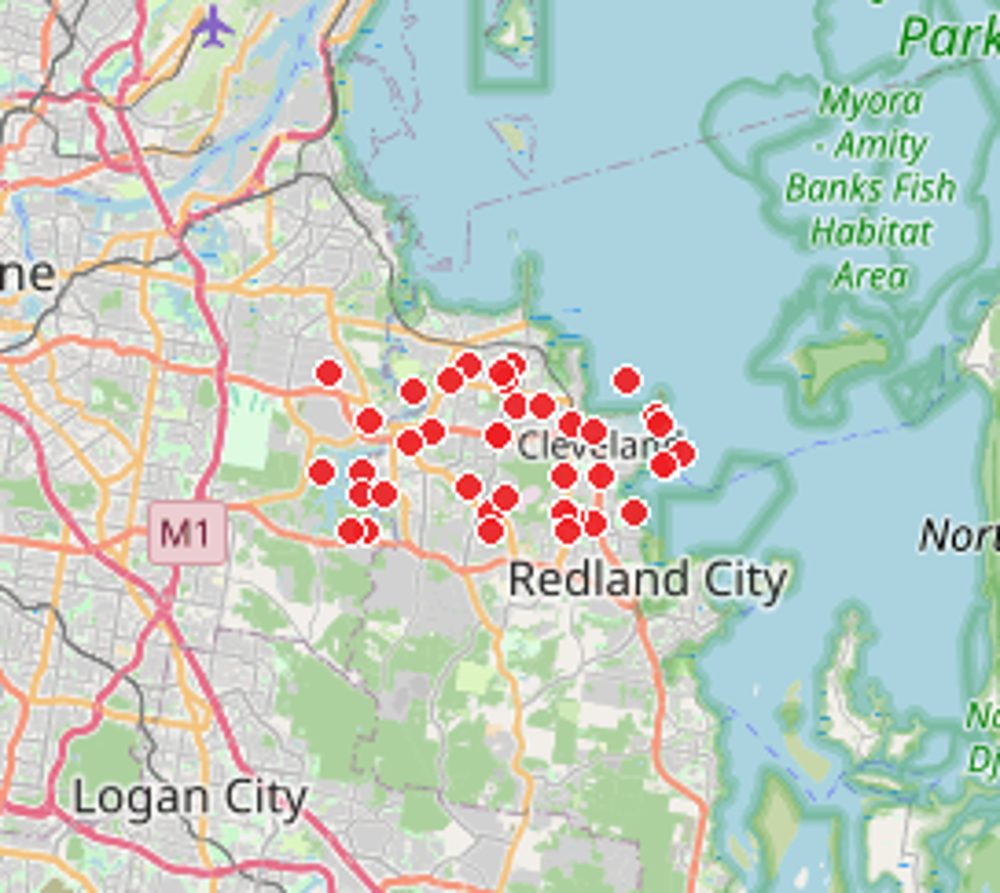
177+ Redlands homes — and what your neighbours say.
Every red dot on the map is a home near here we’ve quoted, advised or insulated (de-identified) — recent records only, a fraction of what we’ve done since 1986.
From a local
“Peter did an amazingly clean job of what seems to be amazingly messy product. Worth every cent though as I have had this insulation installed in a previous home.”
“Our insulation job has been completed with Insulation Qld - Comfort Zone. Everything went well and I would recommend the service to others. Their communication was excellent and they also guarantee their work and give lots of information.”
“He did a good job. I was happy with everything. He was quick, tidy and came out the next day. He did very well job. I would give him 5 stars and I'm happy to recommend!”
The local picture
What Redlands homes actually need.
Right on the bay, Cleveland's sea breeze trims the worst of the summer heat and the water keeps winter nights milder than inland Logan, but that same coastal air is humid and salt-laden. So the insulation priority here is a moisture-tolerant, well-vented roof: a quality cellulose ceiling plus good roof breathing to manage summer humidity and condensation, rather than fighting the kind of heat extremes the inland suburbs cop. Cellulose's breathable, non-corroding fill suits a bayside roof cavity better than fibreglass or foil.
What it costs
What ceiling insulation costs in Redlands.
As a rough guide, ceiling insulation runs $42–$61/m² including GST, depending on the product, your roof type and how hard the access is. A simple low-set roof with an easy manhole costs less per metre than a cut-up two-storey full of downlights, so I don’t publish one flat number for Redlands. Send me your address and I’ll measure your roof off Nearmap and give you a proper fixed-price quote within 48 hours, with no deposit to pay.
Recommended prices. Your local Comfort Zone team confirms your exact price in a written fixed-price quote.
Redlands in brief
Founded
Cleveland proclaimed a township 13 December 1850; Redlands became a shire in 1949 and a city on 15 March 2008
People
159,222 across Redland City, including about 15,851 in Cleveland (ABS 2021 Census)
Industry
Health care and social assistance, retail, education, construction and tourism today — grown from the area's farming, fishing, oyster and timber roots
Setting
Strung along the Moreton Bay coast about 26 km south-east of Brisbane, from Thorneside down to Redland Bay, plus North Stradbroke Island (Minjerribah) and the southern bay islands
Why Comfort Zone
Cellulose insulation, by the family that makes it.
The only cellulose insulation maker still operating in Queensland.
We manufacture every bag ourselves in our own factory at Tiaro. The other Queensland cellulose makers have closed down over the years — these days our competitors buy their cellulose from us. Choose Comfort Zone and you’re dealing with the family who actually makes the product, start to finish.
We make our own cellulose
Most cellulose insulation sold in Australia is manufactured interstate — in Victoria, South Australia or WA. Ours is made right here in our own Tiaro factory, so you deal with the family who makes it, not a sales rep reselling someone else's product.
Three generations, since 1986
Peter learned the trade from his father, Lyle, and runs the business today with his sons. A real family business that's been insulating Queensland homes for nearly 40 years — not a franchise call-centre.
QR-code batch-tracked bags
Every bag we pump into your roof is QR-coded and tracked back to its production batch and your job — full traceability that even the big national brands can't offer.
Don’t take our word for it
Here’s what Alf, a fellow Redlands local, reckons about us.
Filmed on a real Cleveland job — not a paid actor.
Read the transcript
Peter: I'm here with Alf — I've just insulated his garage. What did you think, Alf? Alf: Yes, very good. The garage here was very hot. The rest of the house was air-conditioned and insulated when we were building, but the garage was left over, and I noticed the difference in temperature straight away. So I decided to get the garage insulated as well — and sitting here now, I can already feel it.
Redlands climate
The weather your insulation has to handle.
- Climate type
- Humid subtropical, no real dry season — hot wet summers, mild winters, moderated by Moreton Bay (BoM long-term station data, Redlands HRS / Alexandra Hills, station 040265)
- Hot days at or above 30C (per year)
- About 18 days a year reach 30C or hotter at the long-term Redlands HRS gauge, station 040265 (record 1953–2013) — concentrated Jan–Feb, the summers your air-con fights hardest
- Warm summer nights (Jan mean overnight minimum)
- Mean January overnight minimum about 20.0C at Redlands HRS, station 040265 (record to 2010) — bayside nights barely cool down, so an under-insulated ceiling keeps radiating stored heat into bedrooms
- Hottest on record (full date)
- 38.2C recorded 24 February 2008 at Redlands HRS, station 040265 (record 1965–2013) — late summer is when ceiling heat-gain peaks (date/value to be read off the official BoM Climate statistics table before publishing)
- July (coldest month) mean overnight minimum
- About 8.2C bayside at Redlands HRS, station 040265 — the bay keeps the coast effectively frost-free; only low-lying inland gullies near Capalaba and Mount Cotton see the rare light radiation frost
- Annual rainfall
- About 1271.6mm a year, summer-dominant (Jan–Mar the wettest months) at Redlands HRS, station 040265 — a humid bay climate with no dry season, so a sealed, well-insulated ceiling pays off year-round (rainfall total to be confirmed against the BoM table)
South East Queensland is trending hotter: the Bureau of Meteorology's State of the Climate reporting shows Australia has warmed by around 1.5C since national records began in 1910, with more frequent and longer heatwaves the clearest local effect. For a bayside Redlands home that already gets warm, humid summer nights with little overnight cool-down, that means more days and nights leaning on the air-con. A deep, gap-free cellulose ceiling is the one upgrade that keeps paying back as the cooling season gets longer.
Note: Typical figures are from the Redland (Alexandra Hills) BoM station; published record extremes weren't available at research time.
Climate outlook reviewed 2026-06-11; local job counts updated 2026-06-26. Sources: BoM: Redland (Alexandra Hills) · ABCB climate-zone map.
Redlands at a glance
- Climate zone
- Climate Zone 2 — what R-value that needs
- Postcodes
- 4163
- Local picture
- Cleveland (≈15,850) is the Redlands' bayside town centre, surrounded by detached homes that look straight onto Moreton Bay.
The Redlands are NCC Climate Zone 2, and being right on Moreton Bay, the job here is less about beating harsh heat and more about a moisture-tolerant, well-ventilated roof that handles humid, salt-laden coastal air.
What Zone 2 actually needs — straight from the NCC
the Redlands sits in NCC Climate Zone 2, where the code asks for about R2.5 of added ceiling insulation (NCC 2022 Housing Provisions, Part 13.2.3, Table 13.2.3c) — and we install a deep, gap-free R3.0 cellulose blanket as standard, about 20% over the minimum. Our climate is cooling-dominated, so there's no point chasing a giant R-value the weather won't reward; getting the blanket seamless and gap-free across the whole ceiling matters far more, especially under a hot tile or metal roof. Beware quotes citing “R5.5+” as the ceiling figure — that's a total-system / NatHERS number for the cold southern states, not what we need here.
Read it yourself: NCC 2022 Housing Provisions, Part 13.2.3, Table 13.2.3c — free from the ABCBThe season ahead — and why it matters for your insulation
Mid-2026 moving toward an El Niño lean, warmer and drier for SE QLD, though the bay moderates extremes. Reviewed each season.
Colder than you think
It’s colder around Redlands than in it.
Here is the comparative winter-climate snapshot for the Redlands, built from Bureau of Meteorology long-term station averages. The pattern is classic maritime moderation: the closer you sit to Moreton Bay, the warmer and steadier the nights. Bayside Cleveland, Victoria Point and Redland Bay are effectively frost-free, while the inland fringe around Capalaba and the Mount Cotton hills cools off harder on still, clear winter nights and can pick up the occasional light radiation frost where cold air drains into low gullies. July is the coldest month across the whole district, and summer afternoons are remarkably even — low-to-high 28s right across the area — so the real bayside-versus-inland difference is at night, not in the afternoon.
| Town | Height | Avg July night | Frosts / year | Avg summer day |
|---|---|---|---|---|
| Cleveland / Alexandra Hills (Redlands HRS, central bayside) | 16 m | 8.2°C | Effectively frost-free at the coast — Moreton Bay keeps nights mild | ~29°C (Jan) |
| Victoria Point / Redland Bay (southern bayside) | ~5–15 m | ~8–9°C (bayside, per Redlands HRS) | Frost-free bayside strip — same maritime moderation as Cleveland | ~29°C |
| Capalaba / Mount Cotton (inland Redlands fringe) | ~20–80 m (Mt Cotton hills higher) | ~9°C (est., bracketed by bayside and inland gauges) | Mostly frost-free, but cold-air drainage in low gullies brings occasional light radiation frost on still, clear nights | ~29–30°C (est.) |
| Logan City (inland reference, just west of the Redlands) | ~10 m | ~9.0°C | Light, infrequent frost possible inland on calm, clear nights | ~30°C (Jan) |
| North Stradbroke Island / Minjerribah (bay islands) | Coastal | Mild — open-ocean maritime | Frost-free — surrounded by ocean that barely changes overnight | Mild coastal maxima |
- Maritime moderation is the whole story for the Redlands: the surrounding ocean barely changes temperature overnight, so the closer a home sits to Moreton Bay, the warmer and steadier its winter nights stay.
- July is the coldest month everywhere in the district. Mean overnight minimums bottom out around 8.2°C bayside at Redlands HRS (station 040265) and around 9°C on the inland side; August is statistically just as cold or only slightly milder.
- Summer afternoons are very even across the Redlands — January means sit around the high-28s to low-30s bayside and inland alike — so the genuine climate difference between bayside and inland is at night, not in the afternoon.
- The bayside strip (Cleveland, Victoria Point, Redland Bay) is effectively frost-free thanks to Moreton Bay; real frost in the Redlands is confined to the occasional still, clear night in low-lying inland gullies around Capalaba and the Mount Cotton hills, where cold air drains and pools.
- The insulation takeaway for this district: cooling-season comfort matters as much as winter. Even, warm summer afternoons plus high coastal humidity make a well-insulated, gap-free ceiling the bigger year-round win than chasing frost protection.
Source: Bureau of Meteorology long-term monthly climate statistics: Redlands HRS / Alexandra Hills, station 040265 (Lat 27.53°S, Lon 153.25°E, 16 m; record 1953–2010, station closed 19 March 2013) — https://www.bom.gov.au/climate/averages/tables/cw_040265.shtml . Inland Capalaba / Mount Cotton rows are estimates bracketed by the bayside Redlands HRS gauge and an inland Logan reference — no dedicated long-term-averages station sits in the inland Redlands hills, so those figures are shown as estimates. Bay-island and North Stradbroke / Minjerribah maritime context is qualitative.
A bit about Redlands
We know this patch.
- The Redlands is known as the 'Koala Coast' — one of the last strongholds of wild koalas in South-East Queensland, with the council's Koala Conservation Strategy and the IndigiScapes centre at Capalaba dedicated to protecting them (Redland City Council).
- North Stradbroke Island (Minjerribah), reached by ferry from Cleveland, is the second-largest sand island in the world at about 275 sq km, and home to Naree Budjong Djara National Park, formally declared in 2011 (Queensland Parks and Wildlife; Visit Redlands Coast).
- The Quandamooka people are the Traditional Owners of the Redlands and the bay islands; they were granted native title over most of North Stradbroke Island on 4 July 2011 (National Native Title Tribunal).
- Cleveland Point Lighthouse, a timber hexagonal tower built in 1864–65, still stands on the point — one of only two surviving lighthouses of its form in Queensland (Queensland Heritage Register).
- Cleveland was proclaimed a township on 13 December 1850; the wider Redlands became a shire in 1949 and a city on 15 March 2008 (Redland City Council history).
Local links: BoM — Redlands HRS / Alexandra Hills climate averages (station 040265, closed station table) · Redland City Council · Redlands IndigiScapes Centre (Koala Coast) · Cleveland Point Light — Queensland Heritage Register · National Native Title Tribunal — Quandamooka determination
What we’d recommend in Redlands
The insulation that suits Redlands homes, and why.

Comfort Zone insulation.team
Family-owned insulation manufacturer, making comfy homes since 1986
Brisbane Airport departures and arrivals regularly track over Cleveland, a documented noise concern since the 2020 runway opened. Acoustic cellulose in the ceiling helps soften the aircraft noise reaching your living areas.

Comfort Zone insulation.team
Family-owned insulation manufacturer, making comfy homes since 1986
Cleveland's elevated timber homes on Moreton Bay need underfloor protection from salt air, moisture and pests, and polyester handles the damp coastal subfloor well.

Comfort Zone insulation.team
Family-owned insulation manufacturer, making comfy homes since 1986
The humid bayside climate brings mould and condensation risk; a cellulose ceiling with proper roof ventilation helps keep the roof space dry.
That’s what we see most in Redlands. But every home is different. Browse all our insulation services or ask for a quoteand we’ll tell you what yours needs.
Underfloor, done right
Underfloor in the Redlands: worth it on a high-set Queenslander, useless on a slab

Comfort Zone insulation.team
Family-owned insulation manufacturer, making comfy homes since 1986
Here is what a lot of blokes will not put to you straight: underfloor insulation is worth it on a raised timber-floored home, and it does nothing for you on a slab. If you are in one of the high-set timber Queenslanders or a stumped bayside cottage around Cleveland, Wellington Point, Ormiston or out on the bay islands, you have got open air moving under your floorboards, and that is exactly where underfloor work pays. But if you are in a newer slab-on-ground place in the Thornlands or Redland Bay estates, your floor sits straight on the ground, there is no cavity to insulate, and I will tell you that up front rather than sell you something you do not need.
On a raised timber floor the physics is simple and it cuts both ways through the year. In winter the air under your stumps gets cold, that cold soaks straight up through the boards, and you end up with that chilly-feet feeling first thing in the morning even with the heater going. In summer it flips: when you have got the air-con running, that cool, heavy air you are paying for slides down and falls straight out through the floorboards into the open subfloor, so the split-system runs longer and your bill climbs. YourHome, the Australian Government's own guide, only credits a bare suspended timber floor at about R0.25, so a snug layer of insulation slung up tight under those joists is what stops the floor being a hole in the bottom of the room.
That 'fit it snug' point is the bit the cheap operators skip, and it is the difference between a floor that works and one that does not. The ICANZ 2024 guidance shows that only about 6% of gaps in a layer roughly halves the effective R-value you are paying for, so a sloppy underfloor job with sagging batts and missed bays gives you maybe half the comfort you thought you bought. We fit polyester underfloor batts hard up against the joists with no slumping and no gaps, and the NCC backs the same principle — insulation has to be installed so it holds its position and rated thickness over the life of the floor. Done properly on a raised Redlands home it takes the cold bite off the boards in winter and stops your cool air falling out the bottom in summer; sold to a slab home it is money down the drain, and that is exactly the sort of thing we will tell you straight.
Watch: real jobs
See the work for yourself
A few from our own channel: does cellulose really settle, the flame test, and why we pump it in instead of laying batts.
Filmed on real jobs over the years — our methods, safety standards and products have moved on since. Subscribe to the channel for more.
The difference
On a Redlands roof: what we run into, and how we do it.

Comfort Zone insulation.team
Family-owned insulation manufacturer, making comfy homes since 1986

Comfort Zone insulation.team
Family-owned insulation manufacturer, making comfy homes since 1986
Where we’ve helped — suburb by suburb
177+ Redlands homes, and the postcode for yours.
Find your suburb below — the number is how many homes near you we’ve helped with advice or work. These are only the last few years we’ve kept digital records for, a fraction of what we’ve done since 1986, so if there’s no count next to your suburb yet, be the first on your street.
Redlands & surrounds
177+ homes helped here
- 4165Victoria Point30 homes
- 4157Capalaba24 homes
- 4161Alexandra Hills23 homes
- 4163Cleveland19 homes
- 4160Wellington Point19 homes
- 4165Redland Bay16 homes
- 4164Thornlands16 homes
- 4159Birkdale12 homes
- 4160Ormiston9 homes
- 4184Macleay Island6 homes
- 4158Thorneside3 homes
- Sheldonbe the first
- Coochiemudlo Islandbe the first
- Russell Islandbe the first
- Dunwichbe the first
Counts are de-identified contacts from our records — homeowners we’ve helped with advice or work, not just completed jobs. See the customer map.
Your local team
Redlands is looked after directly by Comfort Zone HQ — for now.
Right now Redlands is served straight out of our family HQ and Tiaro factory, the same people who make the cellulose. Every job is done to one standard, photographed, and the photos checked before you’re invoiced.
Want to run Redlands as your own business?
We’re looking for the right local owner-operator for this patch. If you’re passionate about the building trade — or you already run a business that fits, like air-conditioning, pest control, roofing or solar, and you want a high-margin add-on product to take to the customers you already have — we’ll train you from the ground up. You don’t need insulation experience; you need the right attitude and a patch you want to own. We make the product, we teach you to install and sell it, and you build a family business of your own — backed by the factory.
Redlands questions
Insulation in Redlands — your questions, answered.
I'm right on the bay at Cleveland — our winters are mild, so do I really need ceiling insulation?
You're not buying it for the winter, you're buying it for the summer. The bay keeps your nights mild, but it also keeps them warm and humid, so the house never gets a proper overnight cool-down and an under-insulated ceiling just keeps radiating stored heat into the bedrooms. Around here ceiling insulation is a cooling job first — it cuts the heat load your air-con has to fight on those sticky January nights. That's the bigger year-round win on the bayside than anything to do with frost.
I'm in a newer slab home out in the Thornlands estates — should I get underfloor done too?
No, and I'll tell you that for free. Underfloor only does something where there's open air moving under a raised timber floor. Your slab sits straight on the ground — there's no cavity to insulate, so underfloor would be money down the drain. Put every dollar into your ceiling instead, because on a slab home that's where nearly all your heat is moving.
We've got a high-set timber Queenslander at Wellington Point — does underfloor actually make a difference?
On a place like yours, yes. You've got open air running under your floorboards, so in winter the cold soaks up through the boards and gives you that chilly-feet feeling, and in summer your cool air slides down and falls straight out the bottom. A snug polyester batt fitted hard up under the joists stops the floor being a hole in the bottom of the room. The catch is it has to be fitted tight with no gaps — done sloppy it barely works, which is why we fit it properly or not at all.
There are already old batts in my roof — do I have to rip them out first?
Usually no. If the old batts aren't soaked or rat-infested we pump cellulose straight over the top — it fills every gap they left, covers the timber joists they could never cover, and saves you the mess, the landfill and the dump fees of ripping them out. About 120mm over the top adds roughly R3.0 on top of whatever's already there. If they're full of vermin or water, that's a different conversation and we'll show you the photos.
How much R-value do I need for a Redlands home — is more always better?
No — more is not always better, and anyone telling you to chase the biggest number is having you on. The Redlands is NCC Climate Zone 2, so the ceiling target is around R2.5 added under the current code, not the R5.5 you'll see quoted for cold southern climates. Past the right number for your zone and roof, extra R-value does nothing extra — it's like piling on more sunscreen once you've got a proper coat on. We insulate to what your home actually needs, not to pad the bill.
Do you sell roof vents or whirlybirds to go with the insulation?
No, we don't, and I reckon it's a bit rich for anyone to sell you vents on top of a quality insulation job — it's the 'would you like fries with that' of the insulation world. A sealed, gap-free, fully-insulated ceiling is what keeps your home comfortable. We'll happily repair or remove vents you've already got, but we won't upsell you new ones you don't need.
How do I get a price — do you need to come out and inspect first?
No site visit needed to get a price. Our quotes are done online and they're a fixed price — what we quote is what you pay, we never bump it up when we turn up. You give us the details on your roof and ceiling, we work it out, and you've got a real number to make a decision on. If something on site changes the job, we talk to you first — there are no surprises on the day.
Had your Redlands home done? A review helps your neighbours choose well.
A quick honest review genuinely helps a small family business, and helps the next person decide. Thank you.
Got photos or a video from the job? Here’s where to send them →
Get a quote for your Redlands home.
Tell us your address and a few details and we’ll measure online and send a detailed, fixed-price quote. Phone 0414 586 315.