Where we work · Climate Zone 2
Cellulose ceiling & underfloor insulation in Brisbane.
From the bayside east to the leafy western hills and the established southside, Brisbane is full of mid-century brick-and-tile homes and timber Queenslanders, and a lot of them are under-insulated. We make our own cellulose in Tiaro and pump it into Brisbane ceilings as a seamless blanket that slows the subtropical summer heat.


Comfort Zone insulation.team
Family-owned insulation manufacturer, making comfy homes since 1986
Real reviews, real jobs
What our customers say
Genuine Google & hipages reviews from Comfort Zone customers across SE Queensland.
- J
Jessa B.
Brisbane
“It dropped about 4 degrees straight away, and we added another 3 with the second job. I appreciate Peter's honesty, and the team showed pictures before and after.”
- Ahipages
Angela M.
SE Queensland
“The fact that I can't even tell it's 6 degrees outside when I wake up in the morning speaks for itself. Have wasted so much money attempting to heat and cool an uninsulated home. Worth every $.”
- I
Iain V-B.
Brisbane
“Quick and polite service. Great follow-up advice and photos sent for our records. Above and beyond what we expected. Would highly recommend.”
- Ghipages
Gerry S
Fitzgibbon, 2023
“I used Comfort Zone and they have a done an excellent job.”
- Jhipages
Jung K
Riverhills, 2023
“An experienced family operation. Highly recommend. Thank you for the great job!”
- Dhipages
David H
Sunshine Coast, 2021
“Completed the job as quoted and to a high standard. Great personal service. Would highly recommend Comfort Zone for ceiling installation work.”
- Bhipages
Benjamin H
Carseldine, 2019
“Very good explanation about their works. Advice of existing problems with the roof. Clean work. Very professional.”
- Ihipages
Ian G
Burnside, 2019
“Good information, communication and professionalism.”
- Dhipages
Danny D
Boondall, 2018
“He explained everything he was going to do and the different types of insulation they used. He talked through the different options but made a recommendation for the one most people use, which is the one I chose. He was very understanding towards what I needed and not about himself.”
- Ghipages
Graham R
Riverhills, 2018
“Comfort Zone. Turned up ahead of time, completed in about 2 hours, cleaned up. All good. Very motivated installation team.”
- Ahipages
Alex B
West Ipswich, 2018
“Fast, friendly, efficient.”
- Lhipages
Luke D
Mcdowall, 2017
“Peter did a good job. It was a quick and clean service. I'm happy to recommend!”
- Bhipages
Brendon
Brays Creek, 2016
“Peter supplied and installed roof insulation for me. He was very informative and provided good advice.”
- Thipages
Trevor G
Brookside Centre, 2016
“Excellent tradesmen from Comfort Zone Insulation. They were punctual and cleaned up after. Highly recommended.”
- Jhipages
John G
Beaudesert, 2019
“Peter is an honest person who provided me with the information I wanted then performed a good job with great results for the benefit of myself and my family.”
- Phipages
P Peter
Alstonvale, 2024
“Connected with Comfort Zone Insulation and would recommend them”
- Nhipages
Nola M
Birtinya, 2024
“They were courteous and competent.”
- Jhipages
Jennifer's E
Upper Caboolture, 2024
“Excellent customer service. Highly recommended. Has a profound knowledge of insulation products and has the best interest of his customer.”
- Jhipages
Jennifer
Upper Caboolture, 2024
“Excellent customer service. Highly recommend. Has a profound knowledge of insulation products and has the customer best interest.”
- Dhipages
Diane A
Ormeau, 2024
“Peter and crew did a great job I would definitely recommend them”
- Thipages
Timea
Highland Park, 2023
“I was extremely satisfied with the service they provided. They gave a very thourough explanation of the materials used, the way the work will be carried out and the price I had to pay was the exact amount quoted, no hidden costs included. They arrived on time, well prepared and workwas carried out exactly how they said it would be, they were super efficient, well prepared and were kind enough to even clean up after themselves. The services they provided was second to none! I don't hesitate to recommend them for any insulation job!”
- Mhipages
Mark
Pottsville, 2017
“Michelle, we are done - Peter from comfort zone insulation was very helpful. very honest with his recommendations - in fact he told me that the product my daughter had if installed correctly was superb. Thanks Peter you are a champion and i would recommend you to any person that was wanting professional advice and old school service.”
- Jhipages
Jessica
Pottsville, 2016
“This business offers a fantastic product that other businesses did not. Pump in ceiling insulation. Knowledge of the industry second to none.”
- Jhipages
Jack
Pottsville, 2023
“Excellent communication and informative. Professional.”
- Thipages
Tony P
Redland Bay, 2023
“Very knowledgeable about insulation”
- Shipages
Steve
Redland Bay, 2017
“Excellent job and reasonable price.”
- Bhipages
Bruce H
Kuluin, 2023
“Prompt and efficient quoting.”
- Ghipages
Gerry S
Fitzgibbon, 2023
“I used Comfort Zone and they have a done an excellent job.”
- Thipages
Tamara
Underwood, 2023
“Peter is honest, hard-working and came on time. Knew excally what he was talking about and answered my questions. Would 100% recommend”
- Shipages
Sterling G
Ashgrove, 2023
“Comfort Zone were very knowledge with great communication and follow up”
- Ghipages
Graham R
Riverhills, 2018
“Comfort Zone. Turned up ahead of time completed in +- 2 hours cleaned. All good. Very motivated installation team”
- Jhipages
Jung K
Riverhills, 2023
“An experienced family operation. Highly recommend. Thank you for the great job!”
- Khipages
Kathy A
North Lakes, 2023
“We connected with Peter through HiPages and he was prompt, professional and even came back after the job was complete to assist with a question we had. We would highly recommend Peter for further insulation works.”
- Dhipages
David H
Sunshine Coast, 2021
“Completed the job as quoted and to a high standard. Great personal service. Would highly recommend Comfort Zone for ceiling installationn work.”
- Shipages
Sue H
Sunshine Coast, 2021
“Incredible customer service”
- Ehipages
Eileen C
Cedar Vale, 2021
“Quality work, good customer service, prompt”
- Chipages
Craig M
Woody Point, 2021
“Called within 5 minutes of request. Very knowledgeable and explained job in great detail, provide great advice in prior preparation for works required. Very friendly and helpful.”
- Jhipages
Jenny C
Plainland, 2021
“Although I did not hire Peter I was impressed with the initial contact and the knowledge he was willing to impart. I was treated with respect which I appreciated. I would have hired but I received a lower quote.”
- Qhipages
Quinton
Coomera, 2020
“Professional installation without any short cuts. True to their word with high integrity. Response from Comfort Zone Insulation”
- Ghipages
Gary P
West Kempsey, 2020
“Came & Gave a free quote”
Where we work
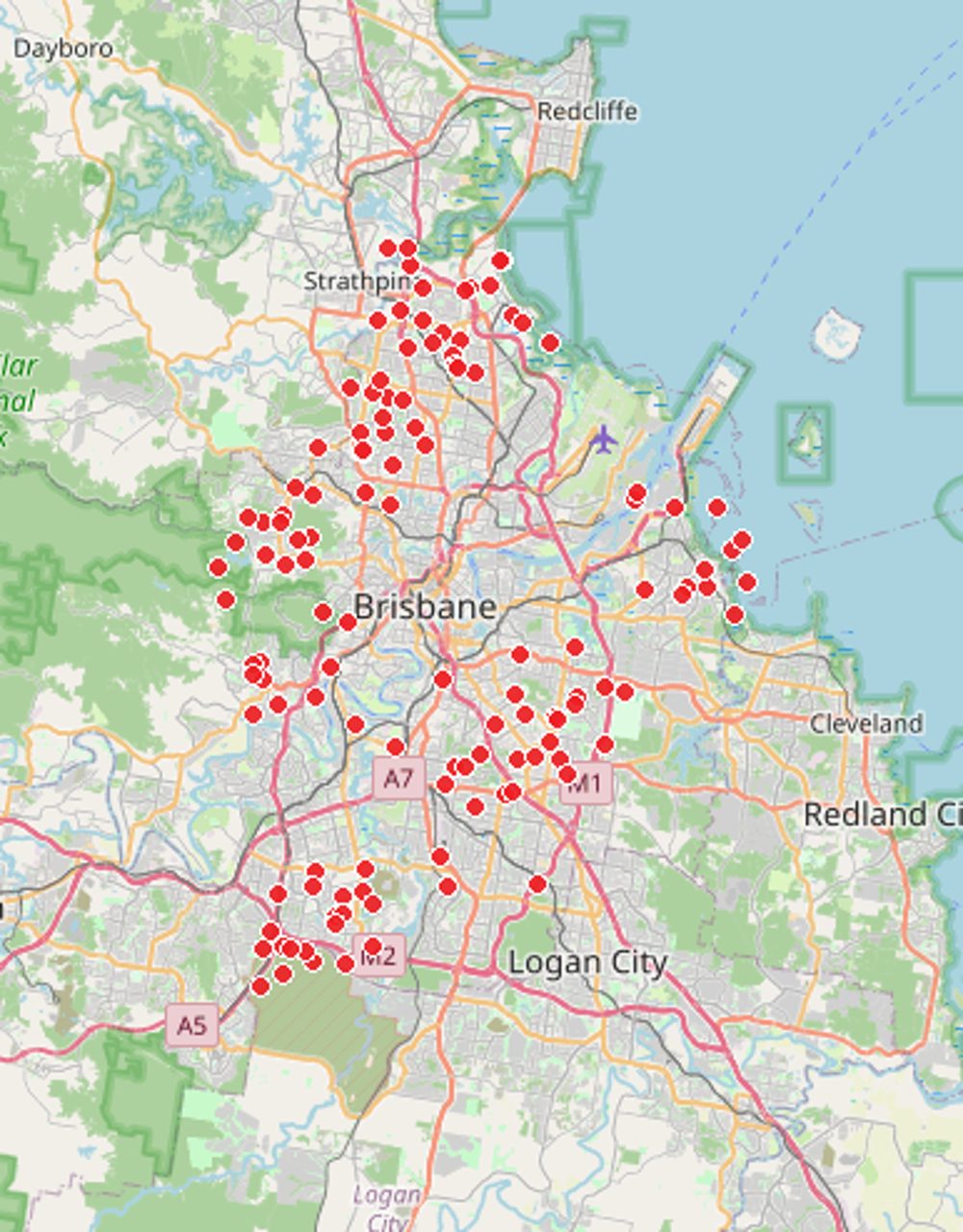
314+ Brisbane homes — and what your neighbours say.
Every red dot on the map is a home near here we’ve quoted, advised or insulated (de-identified) — recent records only, a fraction of what we’ve done since 1986.
From a local
“I have used Comfort Zone Insulation and I wouldn't hesitate to recommend their services. They were professional and showed a great deal of integrity throughout the whole end to end process.”
“Comfort Zone were very knowledgeable, with great communication and follow up.”
“The product is great. Peter contacts you direct, provides good information and is timely in communication.”
The local picture
What Brisbane homes actually need.
Brisbane's a city of micro-climates: bayside Wynnum gets the sea breeze but also salt-laden, humid air where condensation and a well-vented roof matter as much as raw heat; the inland southside (Sunnybank, Moorooka) loses that bay-cooling effect and bakes harder on summer afternoons; and the western hills like Chapel Hill have big west-facing elevations catching the worst of the afternoon sun. The common thread is a large, sun-exposed roof over an older home, which is exactly where topping up the ceiling with dense cellulose makes the biggest difference to comfort and the power bill.
What it costs
What ceiling insulation costs in Brisbane.
As a rough guide, ceiling insulation runs $42–$61/m² including GST, depending on the product, your roof type and how hard the access is. A simple low-set roof with an easy manhole costs less per metre than a cut-up two-storey full of downlights, so I don’t publish one flat number for Brisbane. Send me your address and I’ll measure your roof off Nearmap and give you a proper fixed-price quote within 48 hours, with no deposit to pay.
Recommended prices. Your local Comfort Zone team confirms your exact price in a written fixed-price quote.
Brisbane in brief
Founded
Meeanjin to the Turrbal people, on Yuggera country; the British settled it from 1824 (at Redcliffe), moving to the riverbank CBD site in 1825
People
1,242,825 in the City of Brisbane, and about 2,526,238 across Greater Brisbane (ABS 2021)
Industry
Queensland's capital — government, health, education, finance, the port, tourism, construction and a fast-growing tech sector
Setting
Spread across the floodplains and hills along the winding Brisbane River, about 15 km upstream from Moreton Bay
Why Comfort Zone
Cellulose insulation, by the family that makes it.
The only cellulose insulation maker still operating in Queensland.
We manufacture every bag ourselves in our own factory at Tiaro. The other Queensland cellulose makers have closed down over the years — these days our competitors buy their cellulose from us. Choose Comfort Zone and you’re dealing with the family who actually makes the product, start to finish.
We make our own cellulose
Most cellulose insulation sold in Australia is manufactured interstate — in Victoria, South Australia or WA. Ours is made right here in our own Tiaro factory, so you deal with the family who makes it, not a sales rep reselling someone else's product.
Three generations, since 1986
Peter learned the trade from his father, Lyle, and runs the business today with his sons. A real family business that's been insulating Queensland homes for nearly 40 years — not a franchise call-centre.
QR-code batch-tracked bags
Every bag we pump into your roof is QR-coded and tracked back to its production batch and your job — full traceability that even the big national brands can't offer.
Don’t take our word for it
Here’s what JB, a fellow Brisvegas local, reckons about us.
Filmed on a real Brookfield job — not a paid actor.
Read the transcript
Peter: Peter here from Comfort Zone. We're just here with JB — we've just finished insulating the roof. He's a friend of mine, he's a tradesman and a trainer, and he helped us out today just to finish off this batts job. What do you reckon, JB? JB: Yeah, well, being a trainer I wanted to come out and just see how Pete worked in the construction industry, and we've just got out of the roof there — we've got full protection behind Peter there, and good access. Oh, it's hard work, hard yakka — but all I can say is, anyone that does this type of work, and does it to Peter's quality, all the way out to the tapered edges where the ceiling meets the roofline — hard work. It must be about 60, 70 degrees under there. As you can see I'm actually completely soaked — shirt's completely soaked — and basically I was feeding the batts out to Peter, from the middle of the roof to the outer reaches of the roof, and Peter crawls around on, you know, his belly, on his side — he's probably got scratches and bruises — lying across the rafters. But he's a really, really good tradesman and his work is quality. So regardless of price comparison, if you want a good job, I'd just suggest you pay a bit extra if it is, and get Peter to get it done — you only have to get it done once. Peter: Okay — yeah, thanks. Thanks, mate.
Brisbane climate
The weather your insulation has to handle.
- A humid subtropical city
- Brisbane is humid subtropical, NCC Climate Zone 2, and the inner city is effectively frost-free. In January it averages about 30°C by day and a warm 21.7°C overnight (BoM Brisbane 040913) — so insulating here is about beating summer heat and humidity, not winter cold.
- Days over 30°C (the air-con driver)
- About 30 days a year top 30°C at Brisbane Airport (BoM 040842), and the inner city runs a touch hotter again — bunched through December to February. That's a solid month-plus of air-con weather, every year.
- Warm, humid summer nights
- January nights barely cool off — a mean overnight minimum of 21.7°C with 9am humidity around 63% (BoM 040913). Those warm, sticky nights rarely give the house a chance to dump the day's heat, which is exactly what a sealed, gap-free ceiling helps hold back.
- Hottest on record
- 41.7°C at the Brisbane city station on 22 February 2004 (BoM 040913); the all-time Brisbane record is 43.2°C, set on Australia Day, 26 January 1940. On a day like that an uninsulated roof cavity can climb well past 50°C and pour heat straight down through the ceiling.
- Summer humidity
- Persistently muggy — 9am relative humidity runs 60–66% across December to February, easing only a little by mid-afternoon (BoM 040913). Humid air makes the heat feel hotter and loads up the air-conditioning, so holding the cool, dry air in matters.
- Annual rainfall
- About 1,050 mm a year, heavily summer-weighted, with February the wettest month (BoM 040913). The wet, humid summer is the dominant climate stress in Brisbane — not cold or frost.
And it's trending warmer: BoM's State of the Climate reports Australia has heated about 1.5°C since 1910, with more frequent extreme-heat events, and the Queensland Government's projections point to more very hot days above 35°C and warmer nights across South East Queensland this century. A home that's comfortable now will lean on its ceiling insulation and air-conditioning harder every decade — worth getting right once.
Note: The 43.2°C / −0.1°C extremes are the official Brisbane benchmarks, not a single-suburb record.
Climate outlook reviewed 2026-06-11; local job counts updated 2026-06-26. Sources: BoM: Climate of Brisbane · ABCB climate-zone map.
Brisbane at a glance
- Climate zone
- Climate Zone 2 — what R-value that needs
- Postcodes
- 4109, 4178, 4069, 4105, 4017
- Local picture
- These are established Brisbane suburbs of roughly 9,000–17,000 people each, dominated by detached homes with their own roof space: prime ceiling-insulation territory.
Brisbane sits in NCC Climate Zone 2: warm-humid summers, mild winters. The climate is gentle enough that you don't need to chase a huge R-value; we install a deep, gap-free cellulose ceiling blanket that comfortably meets the Zone 2 target without overspending on a number the weather won't reward.
What Zone 2 actually needs — straight from the NCC
Brisbane sits in NCC Climate Zone 2, where the code asks for about R2.5 of added ceiling insulation (NCC 2022 Housing Provisions, Part 13.2.3, Table 13.2.3c) — and we install a deep, gap-free R3.0 cellulose blanket as standard, about 20% over the minimum. Our climate is cooling-dominated, so there's no point chasing a giant R-value the weather won't reward; getting the blanket seamless and gap-free across the whole ceiling matters far more, especially under a hot tile or metal roof. Beware quotes citing “R5.5+” as the ceiling figure — that's a whole-of-home “total-system” / NatHERS number for the cold southern states, not what Brisbane needs.
Read it yourself: NCC 2022 Housing Provisions, Part 13.2.3, Table 13.2.3c — free from the ABCBThe season ahead — and why it matters for your insulation
As of mid-2026 the Pacific is roughly neutral but leaning toward El Niño, which tends to bring drier, warmer-than-average conditions to SE QLD. We review this each season.
Colder than you think
It’s colder around Brisbane than in it.
Brisbane isn't one climate. The humid inner city and the bayside suburbs — Wynnum, Manly, Redland Bay — sit right on Moreton Bay, and the water works like a giant heat battery: it soaks up warmth through the day and bleeds it back overnight, so bayside nights stay mild and frost essentially never forms. Head west and it flips. The leafy western and outer suburbs — Brookfield, Pullenvale, The Gap, Samford — sit further from the water and lower in the creek valleys, and on a still, clear winter night cold, dense air drains down and pools there long after the bay has levelled out. So a western-suburbs home routinely faces nights several degrees colder than a bayside flat, and the western valleys even cop the odd light frost. That nightly gap is exactly why a good ceiling does more work the further west you live.
| Town | Height | Avg July night | Frosts / year | Avg summer day |
|---|---|---|---|---|
| Brisbane CBD / Airport (inner city) | ~5–8 m | ~10.5°C | Frost-free — the city has never dropped below 2°C | ~30°C (Jan) |
| Bayside — Wynnum / Manly / Redland Bay | ~2–10 m | ~12–13°C ☀ warmest nights | Frost-free — Moreton Bay keeps the nights mild | ~28–29°C (Jan) |
| Leafy western suburbs — Brookfield / The Gap / Pullenvale | ~30–90 m | ~6–8°C on still, clear nights | The odd light frost in the coldest western valleys | ~30–31°C (Jan) |
| Amberley (western-valley proxy) | ~28 m | 5.4°C ❄ coldest | ~6–7 frosty mornings a year; record −4.9°C (8 Aug 1995) | ~31°C (Jan) 🔥 |
- Moreton Bay is the thermostat: a big body of water holds heat and lets it go slowly overnight, so the bayside (Wynnum, Manly) stays mild while inland sites cool off fast. BoM July mean minimums run about 12–13°C on the bay but only ~5.4°C out at Amberley — a gap of roughly 7°C on an average winter night.
- Cold-air drainage drives the western chill: on still, clear nights dense cold air slides downhill and pools in the creek valleys, which is exactly the terrain the leafy western suburbs sit in — so they record their coldest readings on the calmest, clearest nights, the very nights a poorly insulated ceiling loses the most heat.
- Frost is a western-valleys thing, not a Brisbane-wide one: the city station has never dropped below 2°C, yet inland Amberley averages around 6–7 mornings a year below freezing and has hit −4.9°C. The western valleys behave far more like Amberley than like the bay.
- Summer days are hot right across the city — maximums of about 30–31°C inland and on the coast alike. So a western-suburbs home cops the worst of both: hot summer days AND cold winter nights, and that widening swing is the strongest case there is for a sealed, gap-free ceiling.
Source: BoM Climate statistics for Australian locations (Brisbane 040913, Brisbane Aero 040842, Amberley AMO 040004), long-term means; bayside figures from BoM coastal/Redlands records. Pulled 25 June 2026.
A bit about Brisbane
We know this patch.
- The Story Bridge, opened in 1940, is the longest cantilever bridge in Australia — designed by Dr John Bradfield, the same engineer behind the Sydney Harbour Bridge.
- There's been a brewery on the XXXX site at Milton since 1878, and Mr Fourex has been waving at Milton Road traffic since the XXXX brand launched in 1924.
- World Expo 88 drew over 15 million visitors to the river's south bank, and its lasting legacy is South Bank Parklands — a 42-hectare riverside park with a man-made beach in the middle of the city.
- The classic Brisbane home is the timber 'Queenslander' up on stumps — built off the ground to catch the breeze underneath, which is brilliant in summer but means cold air sits right under the floorboards in winter.
- Brisbane will host the 2032 Olympic and Paralympic Games — the IOC elected the city on 21 July 2021, making it Australia's third Olympic host after Melbourne and Sydney.
Local links: BoM — Brisbane climate averages (station 040913) · Brisbane City Council · The University of Queensland · Brisbane 2032 Olympic & Paralympic Games · South Bank Parklands
What we’d recommend in Brisbane
The insulation that suits Brisbane homes, and why.

Comfort Zone insulation.team
Family-owned insulation manufacturer, making comfy homes since 1986
Moorooka (4105) sits under Brisbane Airport's post-2020 flight paths. Dense, gap-free cellulose in the ceiling absorbs aircraft noise coming through the roof far better than lightweight batts, and blocks the summer heat at the same time.

Comfort Zone insulation.team
Family-owned insulation manufacturer, making comfy homes since 1986
For homes near the flight path or busy Ipswich Road, pumped cellulose in the internal walls helps soften aircraft and traffic noise, and it absorbs airborne sound better than fibreglass.

Comfort Zone insulation.team
Family-owned insulation manufacturer, making comfy homes since 1986
Moorooka and Chapel Hill have plenty of high-set and split-level homes on stumps; underfloor polyester cuts the cold-floor draughts on winter mornings.
That’s what we see most in Brisbane. But every home is different. Browse all our insulation services or ask for a quoteand we’ll tell you what yours needs.
Underfloor, done right
Underfloor for a Brisbane Queenslander — but only where it earns its keep

Comfort Zone insulation.team
Family-owned insulation manufacturer, making comfy homes since 1986
If you're in one of the old high-set Queenslanders up on stumps — Paddington, Red Hill, Bardon, out at Wynnum — there's a whole side of your house that's been quietly costing you, and it's under your feet. Those homes were built up off the ground on purpose, to catch the breeze underneath and keep the place cool in summer. Brilliant in January. The problem is winter: that open subfloor fills with cold air, the warm air inside your home sinks and leaks out through the gaps in the boards and through the timber itself, and your feet cop cold floorboards first thing of a morning even with the heater going. A bare timber floor is only about R0.25 (that's YourHome, the Government's own guide), which is next to nothing, so the heat walks straight through.
The part most people never think about is summer, and it's the same floor doing the damage in reverse. On a stinking January day you've got the air-con flat out making cool air, and cool air is heavy — it sinks, and it falls straight out through the floor into that open subfloor, so you're effectively air-conditioning the dirt under your house. Fit batts snug between the joists and you slow that drop-out in both seasons: you hold the warm air in through winter and the cool air in through summer, up in the room where you're actually living.
This only pays off on the right house. If you're out in Forest Lake, North Lakes or Springfield Lakes on a concrete slab poured straight onto the ground, there's nothing under there to insulate — save your money and put it in the ceiling where it'll do real work. And the install is everything: YourHome says even a small gap greatly cuts the value, the 2024 ICANZ figures show around 6% of gaps roughly halves the effective R-value, and the NCC says insulation has to keep its position and thickness over time. Underfloor's the one that loves to sag and drop out the bottom if it's not held right, so we fit a custom polyester floor batt tight to the boards and hold it there for the life of the house.
Watch: real jobs
See the work for yourself
A few from our own channel: does cellulose really settle, the flame test, and why we pump it in instead of laying batts.
Filmed on real jobs over the years — our methods, safety standards and products have moved on since. Subscribe to the channel for more.
The difference
On a Brisbane roof: what we run into, and how we do it.

Comfort Zone insulation.team
Family-owned insulation manufacturer, making comfy homes since 1986
Comfort Zone insulation.team
Family-owned insulation manufacturer, making comfy homes since 1986

Comfort Zone insulation.team
Family-owned insulation manufacturer, making comfy homes since 1986

Comfort Zone insulation.team
Family-owned insulation manufacturer, making comfy homes since 1986
Where we’ve helped — suburb by suburb
717+ Brisbane homes, and the postcode for yours.
Find your suburb below — the number is how many homes near you we’ve helped with advice or work. These are only the last few years we’ve kept digital records for, a fraction of what we’ve done since 1986, so if there’s no count next to your suburb yet, be the first on your street.
Western suburbs (4060 · 4061 · 4064 · 4065 · 4068 · 4069 · 4075)
334+ homes helped here
- 4034Aspley18 homes
- 4035Albany Creek17 homes
- 4069Kenmore14 homes
- 4060Ashgrove14 homes
- 4061The Gap13 homes
- 4152Carina12 homes
- 4065Bardon11 homes
- 4069Chapel Hill10 homes
- 4068Indooroopilly9 homes
- 4069Pullenvale9 homes
- 4055Ferny Hills9 homes
- 4031Kedron9 homes
- 4103Annerley9 homes
- 4075Oxley8 homes
- 4012Wavell Heights8 homes
- Jindalee7 homes
- 4169East Brisbane7 homes
- 4101West End7 homes
- 4105Moorooka7 homes
- 4122Wishart7 homes
- 4073Seventeen Mile Rocks7 homes
- 4109Sunnybank6 homes
- 4051Alderley6 homes
- 4032Chermside West6 homes
- 4030Windsor6 homes
- 4018Fitzgibbon6 homes
- 4172Murarrie6 homes
- 4034Zillmere6 homes
- 4030Wooloowin6 homes
- 4075Corinda5 homes
- Toowong5 homes
- 4108Coopers Plains5 homes
- 4073Sinnamon Park5 homes
- 4121Holland Park5 homes
- 4069Brookfield4 homes
- 4122Upper Mount Gravatt4 homes
- 4171Bulimba4 homes
- 4064Red Hill3 homes
- Kenmore Hills3 homes
- Mount Ommaney3 homes
- 4121Tarragindi3 homes
- 4031Gordon Park3 homes
- 4051Grange3 homes
- 4076Darra3 homes
- 4064Paddington2 homes
- 4122Mount Gravatt East2 homes
- 4012Nundah2 homes
- 4014Banyo2 homes
- 4102Dutton Park2 homes
- 4011Hendra2 homes
- 4075Sherwood1 home
- 4109Macgregor1 home
- 4064Milton1 home
- 4068Chelmer1 home
- 4069Fig Tree Pocketbe the first
- 4075Gracevillebe the first
- 4008Pinkenbabe the first
- 4053McDowallbe the first
- 4120Stones Cornerbe the first
Northern suburbs (4012 · 4017 · 4032 · 4034 · 4035 · 4053 · 4055)
139+ homes helped here
- 4034Aspley18 homes
- 4035Albany Creek17 homes
- Boondall17 homes
- 4017Bracken Ridge15 homes
- 4032Chermside9 homes
- 4017Brighton9 homes
- 4031Kedron9 homes
- 4012Wavell Heights8 homes
- 4053Mitchelton8 homes
- 4055Ferny Grove7 homes
- 4017Sandgate4 homes
- 4053Stafford Heights4 homes
- 4053Stafford3 homes
- 4053Everton Park3 homes
- 4055Arana Hills3 homes
- 4012Nundah2 homes
- 4034Geebung2 homes
- 4017Deagon1 home
- Gaythornebe the first
Southern suburbs (4077 · 4078 · 4103 · 4105 · 4109 · 4113 · 4121 · 4122)
138+ homes helped here
- 4078Forest Lake25 homes
- 4152Camp Hill11 homes
- 4152Carindale10 homes
- 4113Runcorn10 homes
- 4103Annerley9 homes
- 4110Acacia Ridge9 homes
- 4122Mansfield9 homes
- 4151Coorparoo8 homes
- 4122Mount Gravatt7 homes
- 4105Moorooka7 homes
- 4113Eight Mile Plains7 homes
- 4122Wishart7 homes
- 4109Sunnybank6 homes
- 4109Sunnybank Hills6 homes
- 4121Holland Park5 homes
- 4077Inala2 homes
- 4109MacGregorbe the first
Eastern & bayside suburbs (4151 · 4170 · 4171 · 4173 · 4178 · 4179)
106+ homes helped here
- 4178Wynnum16 homes
- 4173Tingalpa14 homes
- 4179Manly West14 homes
- 4178Wynnum West12 homes
- 4152Carina12 homes
- 4170Morningside8 homes
- 4170Cannon Hill7 homes
- 4172Murarrie6 homes
- 4171Bulimba4 homes
- 4171Balmoral4 homes
- 4178Lota4 homes
- 4154Wakerley2 homes
- 4170Hawthorne2 homes
- 4179Manly1 home
- 4154Gumdalebe the first
Counts are de-identified contacts from our records — homeowners we’ve helped with advice or work, not just completed jobs. See the customer map.
Your local team
Brisbane is looked after directly by Comfort Zone HQ — for now.
Right now Brisbane is served straight out of our family HQ and Tiaro factory, the same people who make the cellulose. Every job is done to one standard, photographed, and the photos checked before you’re invoiced.
Want to run Brisbane as your own business?
We’re looking for the right local owner-operator for this patch. If you’re passionate about the building trade — or you already run a business that fits, like air-conditioning, pest control, roofing or solar, and you want a high-margin add-on product to take to the customers you already have — we’ll train you from the ground up. You don’t need insulation experience; you need the right attitude and a patch you want to own. We make the product, we teach you to install and sell it, and you build a family business of your own — backed by the factory.
Brisbane questions
Insulation in Brisbane — your questions, answered.
How much ceiling insulation does a Brisbane home actually need?
Brisbane is NCC Climate Zone 2, where the added ceiling minimum is about R2.5 (Table 13.2.3c). We install a deep, gap-free R3.0 cellulose blanket as standard. Our climate is cooling-dominated, so there's no point chasing a giant R-value the weather won't reward — what really matters is that the blanket covers the whole ceiling with no gaps, especially under a hot tile or metal roof.
I've got a classic Queenslander — what's the best way to insulate it?
The ceiling first, every time — a sealed, gap-free cellulose blanket up top is the single biggest comfort win on an old timber home. Then, if your Queenslander is high-set on stumps, underfloor insulation is well worth it to stop cold floorboards in winter and the cool air dropping out through the floor in summer. We pump cellulose, so the awkward angles, penetrations and old wiring an old home is full of get filled rather than left as gaps.
Will ceiling insulation help with Brisbane's humidity, or just the heat?
Both, and the humidity is the half people forget. Your roof cavity gets brutally hot and muggy through a Brisbane summer, and that sticky air pushes straight down into the rooms. A sealed, gap-free insulated ceiling keeps that hot, humid roof-space air out and holds the cool, dehumidified air from your air-conditioner in — so the aircon isn't fighting the roof all day, and it runs less.
I'm out in the western suburbs (Brookfield, The Gap, Kenmore) — is it different from the bayside?
Yes. The western suburbs sit in the creek valleys away from Moreton Bay, so on still, clear winter nights they run several degrees colder than Wynnum or Manly, and the coldest valleys cop the odd light frost. A bigger gap between inside and outside means your ceiling loses heat faster overnight — so good, gap-free insulation actually does more work the further west you are.
Why cellulose instead of batts for a Brisbane home?
Cellulose is pumped in to a set density so it fills the whole ceiling with no gaps — and gaps are what wreck real-world R-value. In an older Brisbane home full of quirky angles, penetrations and draughty spots, a seamless full-contact fill outperforms batts that leave gaps. It's also borate-treated, so rodents and insects won't nest and live in it the way they do in loose batts — and we can often just top it straight over your tired old batts.
How do you quote a Brisbane job — do you need to come and inspect it first?
No. After this many years on the tools, Peter quotes the whole job online from your details, so you're not waiting around for a site visit, and you get a detailed, fixed-price quote up front. We don't bump that price when we turn up — if something got missed, that's on us. On the rare job where we're genuinely missing a detail, we'll come and check it before we quote. We cover the lot — the western suburbs, the north, the south and the bayside — and every finished job is photographed before you're invoiced.
Had your Brisbane home done? A review helps your neighbours choose well.
A quick honest review genuinely helps a small family business, and helps the next person decide. Thank you.
Got photos or a video from the job? Here’s where to send them →
Get a quote for your Brisbane home.
Tell us your address and a few details and we’ll measure online and send a detailed, fixed-price quote. Phone 0414 586 315.