Where we work · Climate Zone 2
Cellulose ceiling & underfloor insulation in Gympie.
Gympie is an inland Wide Bay valley town with hot, humid summers and surprisingly cold winter mornings. Many homes are classic Queenslanders on stumps with timber-and-tin roofs, and we insulate them with cellulose made just down the Bruce Highway in Tiaro.


Comfort Zone insulation.team
Family-owned insulation manufacturer, making comfy homes since 1986
Real reviews, real jobs
What our customers say
Genuine Google & hipages reviews from Comfort Zone customers across SE Queensland.
- J
Jessa B.
Brisbane
“It dropped about 4 degrees straight away, and we added another 3 with the second job. I appreciate Peter's honesty, and the team showed pictures before and after.”
- Ahipages
Angela M.
SE Queensland
“The fact that I can't even tell it's 6 degrees outside when I wake up in the morning speaks for itself. Have wasted so much money attempting to heat and cool an uninsulated home. Worth every $.”
- I
Iain V-B.
Brisbane
“Quick and polite service. Great follow-up advice and photos sent for our records. Above and beyond what we expected. Would highly recommend.”
- Ghipages
Gerry S
Fitzgibbon, 2023
“I used Comfort Zone and they have a done an excellent job.”
- Jhipages
Jung K
Riverhills, 2023
“An experienced family operation. Highly recommend. Thank you for the great job!”
- Dhipages
David H
Sunshine Coast, 2021
“Completed the job as quoted and to a high standard. Great personal service. Would highly recommend Comfort Zone for ceiling installation work.”
- Bhipages
Benjamin H
Carseldine, 2019
“Very good explanation about their works. Advice of existing problems with the roof. Clean work. Very professional.”
- Ihipages
Ian G
Burnside, 2019
“Good information, communication and professionalism.”
- Dhipages
Danny D
Boondall, 2018
“He explained everything he was going to do and the different types of insulation they used. He talked through the different options but made a recommendation for the one most people use, which is the one I chose. He was very understanding towards what I needed and not about himself.”
- Ghipages
Graham R
Riverhills, 2018
“Comfort Zone. Turned up ahead of time, completed in about 2 hours, cleaned up. All good. Very motivated installation team.”
- Ahipages
Alex B
West Ipswich, 2018
“Fast, friendly, efficient.”
- Lhipages
Luke D
Mcdowall, 2017
“Peter did a good job. It was a quick and clean service. I'm happy to recommend!”
- Bhipages
Brendon
Brays Creek, 2016
“Peter supplied and installed roof insulation for me. He was very informative and provided good advice.”
- Thipages
Trevor G
Brookside Centre, 2016
“Excellent tradesmen from Comfort Zone Insulation. They were punctual and cleaned up after. Highly recommended.”
- Jhipages
John G
Beaudesert, 2019
“Peter is an honest person who provided me with the information I wanted then performed a good job with great results for the benefit of myself and my family.”
- Phipages
P Peter
Alstonvale, 2024
“Connected with Comfort Zone Insulation and would recommend them”
- Nhipages
Nola M
Birtinya, 2024
“They were courteous and competent.”
- Jhipages
Jennifer's E
Upper Caboolture, 2024
“Excellent customer service. Highly recommended. Has a profound knowledge of insulation products and has the best interest of his customer.”
- Jhipages
Jennifer
Upper Caboolture, 2024
“Excellent customer service. Highly recommend. Has a profound knowledge of insulation products and has the customer best interest.”
- Dhipages
Diane A
Ormeau, 2024
“Peter and crew did a great job I would definitely recommend them”
- Thipages
Timea
Highland Park, 2023
“I was extremely satisfied with the service they provided. They gave a very thourough explanation of the materials used, the way the work will be carried out and the price I had to pay was the exact amount quoted, no hidden costs included. They arrived on time, well prepared and workwas carried out exactly how they said it would be, they were super efficient, well prepared and were kind enough to even clean up after themselves. The services they provided was second to none! I don't hesitate to recommend them for any insulation job!”
- Mhipages
Mark
Pottsville, 2017
“Michelle, we are done - Peter from comfort zone insulation was very helpful. very honest with his recommendations - in fact he told me that the product my daughter had if installed correctly was superb. Thanks Peter you are a champion and i would recommend you to any person that was wanting professional advice and old school service.”
- Jhipages
Jessica
Pottsville, 2016
“This business offers a fantastic product that other businesses did not. Pump in ceiling insulation. Knowledge of the industry second to none.”
- Jhipages
Jack
Pottsville, 2023
“Excellent communication and informative. Professional.”
- Thipages
Tony P
Redland Bay, 2023
“Very knowledgeable about insulation”
- Shipages
Steve
Redland Bay, 2017
“Excellent job and reasonable price.”
- Bhipages
Bruce H
Kuluin, 2023
“Prompt and efficient quoting.”
- Ghipages
Gerry S
Fitzgibbon, 2023
“I used Comfort Zone and they have a done an excellent job.”
- Thipages
Tamara
Underwood, 2023
“Peter is honest, hard-working and came on time. Knew excally what he was talking about and answered my questions. Would 100% recommend”
- Shipages
Sterling G
Ashgrove, 2023
“Comfort Zone were very knowledge with great communication and follow up”
- Ghipages
Graham R
Riverhills, 2018
“Comfort Zone. Turned up ahead of time completed in +- 2 hours cleaned. All good. Very motivated installation team”
- Jhipages
Jung K
Riverhills, 2023
“An experienced family operation. Highly recommend. Thank you for the great job!”
- Khipages
Kathy A
North Lakes, 2023
“We connected with Peter through HiPages and he was prompt, professional and even came back after the job was complete to assist with a question we had. We would highly recommend Peter for further insulation works.”
- Dhipages
David H
Sunshine Coast, 2021
“Completed the job as quoted and to a high standard. Great personal service. Would highly recommend Comfort Zone for ceiling installationn work.”
- Shipages
Sue H
Sunshine Coast, 2021
“Incredible customer service”
- Ehipages
Eileen C
Cedar Vale, 2021
“Quality work, good customer service, prompt”
- Chipages
Craig M
Woody Point, 2021
“Called within 5 minutes of request. Very knowledgeable and explained job in great detail, provide great advice in prior preparation for works required. Very friendly and helpful.”
- Jhipages
Jenny C
Plainland, 2021
“Although I did not hire Peter I was impressed with the initial contact and the knowledge he was willing to impart. I was treated with respect which I appreciated. I would have hired but I received a lower quote.”
- Qhipages
Quinton
Coomera, 2020
“Professional installation without any short cuts. True to their word with high integrity. Response from Comfort Zone Insulation”
- Ghipages
Gary P
West Kempsey, 2020
“Came & Gave a free quote”
Where we work
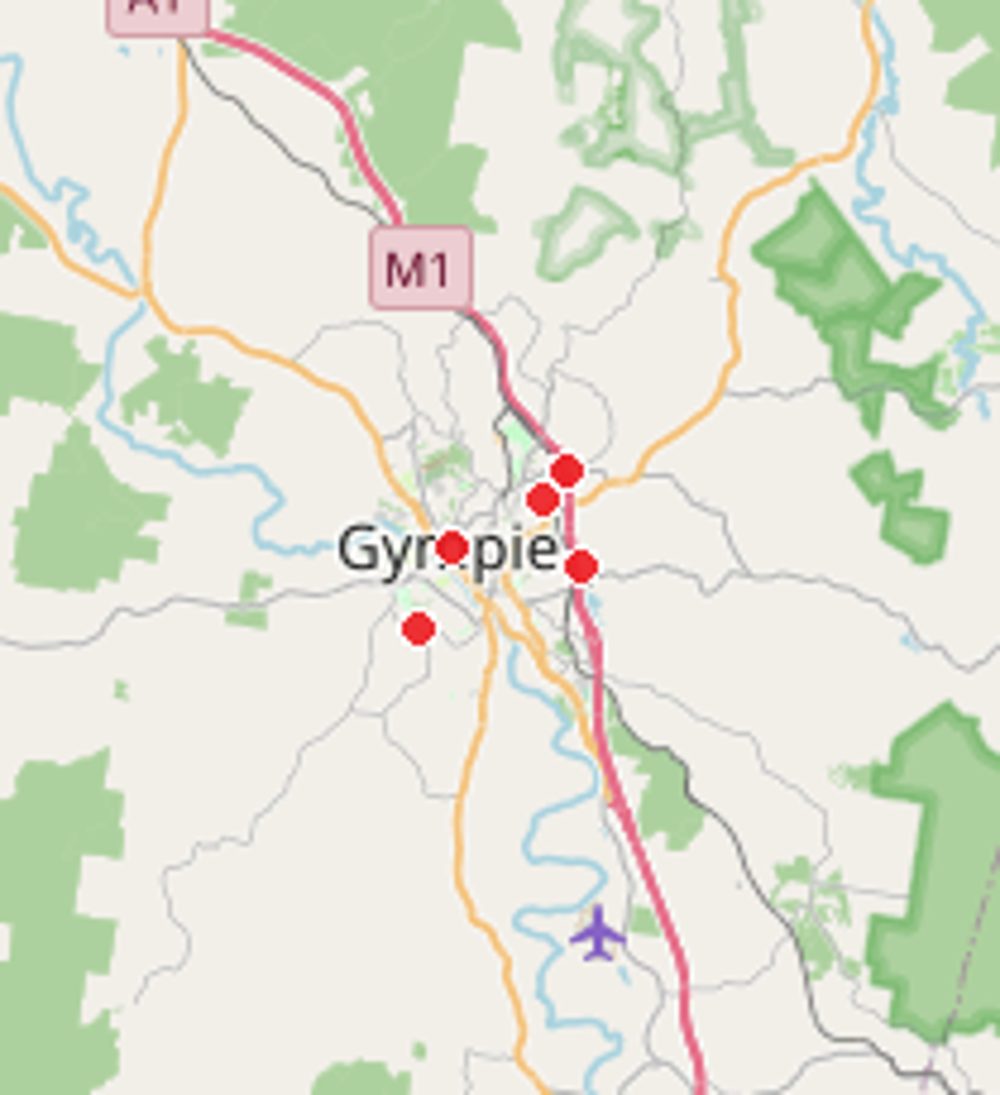
26+ Gympie homes — and what your neighbours say.
Every red dot on the map is a home near here we’ve quoted, advised or insulated (de-identified) — recent records only, a fraction of what we’ve done since 1986.
From a local
“Comfort Zone Insulation was able to come out straight away and got the job done. It was good.”
“Very professional did a good job and tidied up after them cannot flat their work.”
The local picture
What Gympie homes actually need.
Gympie surprises people. The summers are hot and humid with frequent 30°C-plus days, but the winter mornings are genuinely chilly and frost-prone. It has dropped to −4°C. So this is a two-season insulation case, not just a keep-cool one. With so many classic Queenslanders on stumps with timber/tin roofs, ceiling insulation does the heavy lifting against the summer heat, while underfloor draughts are what make the winters feel colder than the coast, which is why a full envelope of ceiling plus underfloor works best here.
What it costs
What ceiling insulation costs in Gympie.
As a rough guide, ceiling insulation runs $42–$61/m² including GST, depending on the product, your roof type and how hard the access is. A simple low-set roof with an easy manhole costs less per metre than a cut-up two-storey full of downlights, so I don’t publish one flat number for Gympie. Send me your address and I’ll measure your roof off Nearmap and give you a proper fixed-price quote within 48 hours, with no deposit to pay.
Recommended prices. Your local Comfort Zone team confirms your exact price in a written fixed-price quote.
Gympie in brief
Founded
Gold discovered by James Nash in October 1867 (settlement first named Nashville, renamed Gympie in 1868); proclaimed a town in 1903.
People
Urban centre 22,424 (ABS 2021 Census); the wider Gympie Region LGA had 53,242 people (ABS 2021 Census).
Industry
Agriculture (dairying predominant) and timber in the surrounding Mary Valley, plus gold-mining heritage, beef grazing, small-scale and regenerative food production, and tourism (Mary Valley Rattler, Rainbow Beach and Cooloola).
Setting
Inland city on the Mary River about 170 km north of Brisbane, in the northern Sunshine Coast hinterland at roughly 65 m elevation. Rolling, hilly gold-rush townscape on a flood-prone river, with the fertile Mary Valley to the south and the Cooloola coast (Tin Can Bay, Rainbow Beach) to the east.
Why Comfort Zone
Cellulose insulation, by the family that makes it.
The only cellulose insulation maker still operating in Queensland.
We manufacture every bag ourselves in our own factory at Tiaro. The other Queensland cellulose makers have closed down over the years — these days our competitors buy their cellulose from us. Choose Comfort Zone and you’re dealing with the family who actually makes the product, start to finish.
We make our own cellulose
Most cellulose insulation sold in Australia is manufactured interstate — in Victoria, South Australia or WA. Ours is made right here in our own Tiaro factory, so you deal with the family who makes it, not a sales rep reselling someone else's product.
Three generations, since 1986
Peter learned the trade from his father, Lyle, and runs the business today with his sons. A real family business that's been insulating Queensland homes for nearly 40 years — not a franchise call-centre.
QR-code batch-tracked bags
Every bag we pump into your roof is QR-coded and tracked back to its production batch and your job — full traceability that even the big national brands can't offer.
Don’t take our word for it
Here’s what Our customer, a Comfort Zone customer, reckons about us.
A real Comfort Zone customer — filmed on the job, not a paid actor.
Read the transcript
Yeah, good job, well done. Very tidy, very helpful. Thank you very much. That's us from Comfort Zone Isolation.
Gympie climate
The weather your insulation has to handle.
- Hot days over 30C (per year)
- 89.2 days a year at or above 30C, plus 13.2 days at or above 35C (BoM station 040093, all-years statistics, 60-year record 1965-2026)
- Hottest day on record
- 42.4C on 4 January 2014 (BoM Gympie station 040093, extremes period 1965-2026)
- Warm summer nights (January overnight minimum)
- Mean January overnight minimum 19.6C and February 19.7C (BoM station 040093, mean minimum temperature, record from 1908)
- Mild winter days (July maximum)
- Mean July maximum a mild 21.9C, so cooling not frost is the real job (BoM station 040093, mean maximum temperature, record from 1908)
- Summer morning humidity (9am relative humidity)
- Mean 9am relative humidity 71% in January, 76% in February and 77% in March; afternoons ease to a mean 3pm RH of about 56% in January and 60% in February (BoM station 040093, 9am RH record 1938-2010, 3pm RH record 1966-2010)
- Annual rainfall (summer-dominant)
- 1118.1 mm a year, concentrated in a wet summer (January 159.8 mm, February 168.4 mm, March 143.9 mm) (BoM station 040093, mean rainfall, 155-year record 1870-2026)
Gympie's design challenge is built around summer heat, not frost: the inland Mary River valley already averages 89.2 days a year at or above 30C and 13.2 days at or above 35C (BoM station 040093, 60-year record 1965-2026), and the hottest day on the books hit 42.4C on 4 January 2014. With long, hot, humid summers in this Climate Zone 2 town, the ceiling is the front line against the heat load for roughly a quarter of the year, and a sealed, gap-free ceiling is what lets the air-con keep up.
Climate outlook reviewed 2026-06-11; local job counts updated 2026-06-26. Sources: BoM: Gympie climate · ABCB climate-zone map (QLD).
Gympie at a glance
- Climate zone
- Climate Zone 2 — what R-value that needs
- Postcodes
- 4570
- Local picture
- Gympie town (≈11,400) anchors a regional council of over 53,000, with heritage timber homes and rural-residential blocks across the Mary Valley.
Gympie is NCC Climate Zone 2, but as an inland Wide Bay valley town it's a genuine two-season insulation case: hot humid summers and chilly, frost-prone winter mornings.
What Zone 2 actually needs — straight from the NCC
Gympie sits in NCC Climate Zone 2, where the code asks for about R2.5 of added ceiling insulation (NCC 2022 Housing Provisions, Part 13.2.3, Table 13.2.3c) — and we install a deep, gap-free R3.0 cellulose blanket as standard, about 20% over the minimum. Our climate is cooling-dominated, so there's no point chasing a giant R-value the weather won't reward; getting the blanket seamless and gap-free across the whole ceiling matters far more, especially under a hot tile or metal roof. Beware quotes citing “R5.5+” as the ceiling figure — that's a total-system / NatHERS number for the cold southern states, not what we need here.
Read it yourself: NCC 2022 Housing Provisions, Part 13.2.3, Table 13.2.3c — free from the ABCBThe season ahead — and why it matters for your insulation
Mid-2026 the Pacific is transitioning toward El Niño, a warmer, drier lean for the Wide Bay into winter–spring. Reviewed each season.
Colder than you think
It’s colder around Gympie than in it.
Here is the inland-versus-coastal split for the Gympie hinterland against the Cooloola coast, straight off the Bureau of Meteorology climate-averages tables. Gympie sits in a low river valley about 30 km from the sea and swings hard both ways: hot summer afternoons and cold, frost-capable winter mornings. The coast at Rainbow Beach and Tewantin is buffered by the ocean, so it runs cooler summer maxima but far milder, essentially frost-free nights. The Tin Can Bay Defence site only publishes daily observations, so Rainbow Beach 14 km up the same coast is the standard BoM reference for the Cooloola coast, with Tewantin near Noosa shown as a second coastal comparator.
| Town | Height | Avg July night | Frosts / year | Avg summer day |
|---|---|---|---|---|
| Gympie (BoM 040093, inland Mary River valley) | 65 m | 6.4 C | Frost-prone in the low valley: the all-years table shows about 4.8 mornings a year at or below 2C and 1.7 at or below 0C in July, on still, clear nights | 31.2 C (Jan); 31.3 C (Dec) |
| Rainbow Beach (BoM 040856, Cooloola coast) | 14 m | 10.4 C | Effectively frost-free: the ocean keeps overnight minima about 4C warmer than Gympie | 28.9 C (Jan) |
| Tewantin / Noosa (BoM 040908, southern Cooloola coast) | 6 m | 11.3 C | Frost-free coastal site, the mildest winter nights of the three | 28.7 C (Jan) |
- Inland-versus-coastal winter-night gap: Gympie's mean July minimum is 6.4C against 10.4C at Rainbow Beach, about 4C colder. The valley floor pools cold air on still, clear nights, which is why frost forms inland while the coast stays frost-free.
- Summer-day reversal: Gympie's mean summer maximum (31.2C January, 31.3C December) runs about 2.4C hotter than the Cooloola coast (28.9C at Rainbow Beach), because the sea breeze caps the coastal afternoon heat that the inland valley misses.
- Bigger annual swing inland: Gympie's mean range from coldest-night (6.4C July) to hottest-day (31.3C December) is about 24.9C, against roughly 18.5C at Rainbow Beach (10.4C to 28.9C). The maritime coast is far more even year-round.
- Rainfall climbs toward the coast: mean annual rainfall is 1118 mm at Gympie, 1454 mm at Rainbow Beach and 1608 mm at Tewantin, wetter the closer you get to the Cooloola and Noosa coast.
- Insulation read-through: the inland Mary Valley (Gympie, Kandanga, Imbil, Amamoor) is a genuine two-season climate, cold enough for winter frosts and hot for summer afternoons, so it benefits from a ceiling that works both ways, while the coast's milder swing is more about taking the edge off summer heat.
Source: Bureau of Meteorology, Climate statistics for Australian locations: Gympie station 040093 (elevation 65 m; temperature record from 1908, rainfall from 1870), Rainbow Beach station 040856 (elevation 14 m; 1992-2025), and Tewantin RSL Park station 040908 (elevation 6 m; 1995/96-2026). Tables at bom.gov.au/climate/averages/tables (cw_040093, cw_040856, cw_040908). All figures retrieved 25 June 2026.
A bit about Gympie
We know this patch.
- Gympie is known as 'the town that saved Queensland': James Nash's October 1867 gold discovery sparked a rush that pulled the near-bankrupt colony back from financial ruin, with up to 25,000 people on the goldfield within months and the field eventually yielding over fourteen million pounds in gold (Queensland State Archives, 'The Town That Saved Queensland').
- The Mary River floods Gympie catastrophically: the river reached 22.96 m on 27 February 2022, the city's second-highest flood on record behind the 25.45 m peak of February 1893, inundating thousands of homes (Gympie Regional Council flood history / Bureau of Meteorology).
- Just east of Gympie, the Coloured Sands at Rainbow Beach form towering striped dune cliffs said to contain as many as 72 different colours, exposed by coastal erosion within Great Sandy National Park (Queensland Parks and Wildlife Service).
- The Mary Valley Rattler heritage steam train runs a restored 1920s C17 locomotive on the historic 40 km line from Gympie Station through Dagun, Amamoor and Kandanga to Imbil, a railway first opened in 1915 and revived as a tourist service (Mary Valley Rattler).
- The fertile Mary Valley south of Gympie is long-established dairy, timber and grazing country whose volcanic soils and reliable rainfall built townships like Kandanga, Imbil and Amamoor along the rail line, and it still draws small-scale and regenerative food producers today (Gympie Regional Council, 'Wild Heart Bountiful Land').
Local links: Bureau of Meteorology - Gympie observations and forecast · Gympie Regional Council · Cooloola Recreation Area, Great Sandy National Park (QPWS) · Gympie Gold Mining and Historical Museum · Mary Valley Rattler heritage railway
What we’d recommend in Gympie
The insulation that suits Gympie homes, and why.

Comfort Zone insulation.team
Family-owned insulation manufacturer, making comfy homes since 1986
Gympie's hot humid summers and frosty winter mornings make a year-round case for ceiling insulation; cellulose blocks summer heat through tin-and-timber roofs and holds heating in on cold mornings.

Comfort Zone insulation.team
Family-owned insulation manufacturer, making comfy homes since 1986
Gympie's stumped Queenslanders cop cold air pooling underneath on frost-prone June–August mornings, so sealing the underfloor cavity stops the chill and the draughts.

Comfort Zone insulation.team
Family-owned insulation manufacturer, making comfy homes since 1986
The Bruce Highway (and its new bypass) and the North Coast rail line run close to Gympie; dense cellulose absorbs that traffic and freight noise better than batts on the noisier side of the house.
That’s what we see most in Gympie. But every home is different. Browse all our insulation services or ask for a quoteand we’ll tell you what yours needs.
Underfloor, done right
Underfloor insulation in Gympie: a Queenslander-on-stumps job, not an every-house job

Comfort Zone insulation.team
Family-owned insulation manufacturer, making comfy homes since 1986
If you are in an old high-set Queenslander on stumps, you already know the feeling: you walk across the floorboards on a cold Mary Valley morning and the boards are like ice under your feet. That is not your imagination. With an open subfloor the air moving under the house is the same cold air sitting outside, and it is pulling the heat straight down out of your floorboards, while warm air inside drops and leaks away through the gaps between the boards. The Australian Government's YourHome guide rates an uninsulated suspended timber floor at only about R0.25, which is next to nothing standing between your warm room and the cold air under the house, so filling that floor properly stops the boards going cold and stops your heating dropping out the bottom.
Summer is the flip side of the same coin, and this is the bit people do not think about. You have spent good money running the air conditioner, and that cool air is heavy, so it wants to fall: in a high-set Queenslander with a bare floor a fair bit of the cold air you paid for drops straight down through the floorboards into the hot subfloor while heat radiating up off the ground keeps pushing back into your rooms, so the air-con runs harder and longer for the same comfort. We do underfloor in polyester batts, not cellulose, because cellulose belongs in a dry ceiling cavity and not in an open subfloor, and I will tell you straight when a floor is worth doing and when it is not. On the newer slab-on-ground estates around Southside, Monkland and Cooloola Cove there is no subfloor to insulate, the ground under a slab stays at a fairly steady temperature year-round, and I will not pretend there is a job there.
Now the part that separates a real job from a botched one, which is coverage. YourHome puts it plainly: even a small gap can greatly reduce the insulating value, and it is not a small effect either, because ICANZ's 2024 guidance shows that leaving roughly 6 per cent of the area uncovered with gaps can about halve the effective R-value you paid for. Underfloor is unforgiving on that, because batts that are not tight against every joist, or that sag or fall out over time, leave cold paths straight through, and the National Construction Code does not just say insulate, it says the insulation has to be installed and held in position, which under a floor means properly fixed so it cannot droop or drop. That is the whole game: a floor insulated tight, gap-free and fixed to stay put so it is still doing its job in ten years, not lying in the dirt. Have a look at our online quote and we will work out whether your floor is one worth doing.
Watch: real jobs
See the work for yourself
A few from our own channel: does cellulose really settle, the flame test, and why we pump it in instead of laying batts.
Filmed on real jobs over the years — our methods, safety standards and products have moved on since. Subscribe to the channel for more.
The difference
On a Gympie roof: what we run into, and how we do it.

Comfort Zone insulation.team
Family-owned insulation manufacturer, making comfy homes since 1986

Comfort Zone insulation.team
Family-owned insulation manufacturer, making comfy homes since 1986

Comfort Zone insulation.team
Family-owned insulation manufacturer, making comfy homes since 1986

Comfort Zone insulation.team
Family-owned insulation manufacturer, making comfy homes since 1986
Where we’ve helped — suburb by suburb
26+ Gympie homes, and the postcode for yours.
Find your suburb below — the number is how many homes near you we’ve helped with advice or work. These are only the last few years we’ve kept digital records for, a fraction of what we’ve done since 1986, so if there’s no count next to your suburb yet, be the first on your street.
Gympie & surrounds
24+ homes helped here
- 4570Gympie5 homes
- 4570Southside5 homes
- 4570Jones Hill2 homes
- 4570Kandanga2 homes
- 4570Curra2 homes
- 4570Monkland2 homes
- 4570Victory Heights1 home
- 4570Imbil1 home
- 4570Amamoor1 home
- 4570Veteran1 home
- 4570Pie Creek1 home
- 4570Brooloo1 home
- Glanmirebe the first
- Cooloola Covebe the first
- Rainbow Beachbe the first
- Chatsworthbe the first
- The Dawnbe the first
- Two Milebe the first
Counts are de-identified contacts from our records — homeowners we’ve helped with advice or work, not just completed jobs. See the customer map.
Your local team
Gympie is looked after directly by Comfort Zone HQ — for now.
Right now Gympie is served straight out of our family HQ and Tiaro factory, the same people who make the cellulose. Every job is done to one standard, photographed, and the photos checked before you’re invoiced.
Want to run Gympie as your own business?
We’re looking for the right local owner-operator for this patch. If you’re passionate about the building trade — or you already run a business that fits, like air-conditioning, pest control, roofing or solar, and you want a high-margin add-on product to take to the customers you already have — we’ll train you from the ground up. You don’t need insulation experience; you need the right attitude and a patch you want to own. We make the product, we teach you to install and sell it, and you build a family business of your own — backed by the factory.
Gympie questions
Insulation in Gympie — your questions, answered.
Gympie gets hot, humid summers and cold winter mornings. Does insulation actually help with both?
Yes, and that is the whole point of insulating a Gympie home. We sit in NCC Climate Zone 2 in a river valley that swings hard: 89 days a year over 30C and a mean January min near 19.6C in summer, then July mornings down around 6.4C with frost on the low ground. A sealed, gap-free ceiling slows heat coming in through the roof in summer so your air-con is not fighting a losing battle, and it holds your warmth in on those cold valley mornings. The ceiling carries the biggest heat load either way, so it is the first thing worth doing.
Why do you recommend cellulose over batts for a humid place like the Mary Valley?
Two reasons that matter here. First, coverage: cellulose is blown in and fills every gap, corner and penetration, where batts leave gaps along joists and around fittings, and gaps are where insulation quietly stops working. Second, moisture: cellulose is hygroscopic, so if you ever get a roof leak it holds the water in one spot, dries out and leaves a stain you can find, instead of letting water run free across the whole ceiling. In a wet, humid, summer-storm climate like Gympie's that is a real advantage.
My place is a high-set Queenslander up on stumps. Is underfloor insulation worth it?
On a high-set Queenslander, yes, it usually is, and Gympie and the Mary Valley towns are full of them. With an open subfloor the cold morning air under the house pulls heat straight out of your floorboards in winter, and in summer the cool air you paid the air-con for drops out through the floor into the hot subfloor. We fill the floor with custom polyester batts, fixed tight so they cannot sag or fall out. If you are on a newer slab-on-ground home around Southside or Monkland, there is no subfloor to do and I will tell you so.
Do I have to get someone out to quote, or can I do it online?
You can do the whole thing online. Our quote is a fixed online price and it does not get bumped up when we arrive on the day. You give us the details of your roof, ceiling and home and we work out the job from that. It saves you sitting around waiting for a salesman, and it means the price you see is the price you pay.
Is more R-value always better? Should I just pack in as much as possible?
No, and I will not sell you that. Past the right R-value for our climate zone and your roof, more insulation does basically nothing extra, like sunscreen once you have enough on. For a Zone 2 ceiling here the NCC added figure is R2.5, and topping a Gympie ceiling to the right level for the zone is what saves you money. Paying for a giant number above that is just spending money for no extra comfort, and I would rather tell you straight than oversell you.
I already have old batts in the roof. Do they have to come out first?
Usually not. In most cases we top straight over your existing batts with blown cellulose, around 120mm adding roughly R3 over whatever is up there. That fills the gaps the old batts left, covers the timber joists that the batts never did, keeps the value of what you already paid for, and saves you the mess, landfill and dump fees of ripping it all out. If your old batts are rat-nested or wrecked, that is a different conversation and we will talk it through with you.
Why does it matter who installs it? Can't anyone throw insulation in a roof?
Installing insulation used to be a trade qualification, like plumbing or electrical, and since that was dropped in Queensland people have died doing it. Old halogen and 240V downlights get very hot and must never be covered, or the trapped heat can melt the lamp, and roofs in the Gympie hills can be steep and slippery, especially with morning dew. We run a safety check and toolbox meeting on every job because every house is a new workspace. That is why you use a trained team, not whoever is cheapest.
Had your Gympie home done? A review helps your neighbours choose well.
A quick honest review genuinely helps a small family business, and helps the next person decide. Thank you.
Got photos or a video from the job? Here’s where to send them →
Get a quote for your Gympie home.
Tell us your address and a few details and we’ll measure online and send a detailed, fixed-price quote. Phone 0414 586 315.