Where we work · Climate Zone 2
Cellulose ceiling & underfloor insulation in Logan.
Springwood and the wider Logan are inland SE QLD, with hotter, stiller summer afternoons and colder clear winter nights than the bayside suburbs. We insulate Logan homes with seamless cellulose made down the road in Tiaro.


Comfort Zone insulation.team
Family-owned insulation manufacturer, making comfy homes since 1986
Real reviews, real jobs
What our customers say
Genuine Google & hipages reviews from Comfort Zone customers across SE Queensland.
- J
Jessa B.
Brisbane
“It dropped about 4 degrees straight away, and we added another 3 with the second job. I appreciate Peter's honesty, and the team showed pictures before and after.”
- Ahipages
Angela M.
SE Queensland
“The fact that I can't even tell it's 6 degrees outside when I wake up in the morning speaks for itself. Have wasted so much money attempting to heat and cool an uninsulated home. Worth every $.”
- I
Iain V-B.
Brisbane
“Quick and polite service. Great follow-up advice and photos sent for our records. Above and beyond what we expected. Would highly recommend.”
- Ghipages
Gerry S
Fitzgibbon, 2023
“I used Comfort Zone and they have a done an excellent job.”
- Jhipages
Jung K
Riverhills, 2023
“An experienced family operation. Highly recommend. Thank you for the great job!”
- Dhipages
David H
Sunshine Coast, 2021
“Completed the job as quoted and to a high standard. Great personal service. Would highly recommend Comfort Zone for ceiling installation work.”
- Bhipages
Benjamin H
Carseldine, 2019
“Very good explanation about their works. Advice of existing problems with the roof. Clean work. Very professional.”
- Ihipages
Ian G
Burnside, 2019
“Good information, communication and professionalism.”
- Dhipages
Danny D
Boondall, 2018
“He explained everything he was going to do and the different types of insulation they used. He talked through the different options but made a recommendation for the one most people use, which is the one I chose. He was very understanding towards what I needed and not about himself.”
- Ghipages
Graham R
Riverhills, 2018
“Comfort Zone. Turned up ahead of time, completed in about 2 hours, cleaned up. All good. Very motivated installation team.”
- Ahipages
Alex B
West Ipswich, 2018
“Fast, friendly, efficient.”
- Lhipages
Luke D
Mcdowall, 2017
“Peter did a good job. It was a quick and clean service. I'm happy to recommend!”
- Bhipages
Brendon
Brays Creek, 2016
“Peter supplied and installed roof insulation for me. He was very informative and provided good advice.”
- Thipages
Trevor G
Brookside Centre, 2016
“Excellent tradesmen from Comfort Zone Insulation. They were punctual and cleaned up after. Highly recommended.”
- Jhipages
John G
Beaudesert, 2019
“Peter is an honest person who provided me with the information I wanted then performed a good job with great results for the benefit of myself and my family.”
- Phipages
P Peter
Alstonvale, 2024
“Connected with Comfort Zone Insulation and would recommend them”
- Nhipages
Nola M
Birtinya, 2024
“They were courteous and competent.”
- Jhipages
Jennifer's E
Upper Caboolture, 2024
“Excellent customer service. Highly recommended. Has a profound knowledge of insulation products and has the best interest of his customer.”
- Jhipages
Jennifer
Upper Caboolture, 2024
“Excellent customer service. Highly recommend. Has a profound knowledge of insulation products and has the customer best interest.”
- Dhipages
Diane A
Ormeau, 2024
“Peter and crew did a great job I would definitely recommend them”
- Thipages
Timea
Highland Park, 2023
“I was extremely satisfied with the service they provided. They gave a very thourough explanation of the materials used, the way the work will be carried out and the price I had to pay was the exact amount quoted, no hidden costs included. They arrived on time, well prepared and workwas carried out exactly how they said it would be, they were super efficient, well prepared and were kind enough to even clean up after themselves. The services they provided was second to none! I don't hesitate to recommend them for any insulation job!”
- Mhipages
Mark
Pottsville, 2017
“Michelle, we are done - Peter from comfort zone insulation was very helpful. very honest with his recommendations - in fact he told me that the product my daughter had if installed correctly was superb. Thanks Peter you are a champion and i would recommend you to any person that was wanting professional advice and old school service.”
- Jhipages
Jessica
Pottsville, 2016
“This business offers a fantastic product that other businesses did not. Pump in ceiling insulation. Knowledge of the industry second to none.”
- Jhipages
Jack
Pottsville, 2023
“Excellent communication and informative. Professional.”
- Thipages
Tony P
Redland Bay, 2023
“Very knowledgeable about insulation”
- Shipages
Steve
Redland Bay, 2017
“Excellent job and reasonable price.”
- Bhipages
Bruce H
Kuluin, 2023
“Prompt and efficient quoting.”
- Ghipages
Gerry S
Fitzgibbon, 2023
“I used Comfort Zone and they have a done an excellent job.”
- Thipages
Tamara
Underwood, 2023
“Peter is honest, hard-working and came on time. Knew excally what he was talking about and answered my questions. Would 100% recommend”
- Shipages
Sterling G
Ashgrove, 2023
“Comfort Zone were very knowledge with great communication and follow up”
- Ghipages
Graham R
Riverhills, 2018
“Comfort Zone. Turned up ahead of time completed in +- 2 hours cleaned. All good. Very motivated installation team”
- Jhipages
Jung K
Riverhills, 2023
“An experienced family operation. Highly recommend. Thank you for the great job!”
- Khipages
Kathy A
North Lakes, 2023
“We connected with Peter through HiPages and he was prompt, professional and even came back after the job was complete to assist with a question we had. We would highly recommend Peter for further insulation works.”
- Dhipages
David H
Sunshine Coast, 2021
“Completed the job as quoted and to a high standard. Great personal service. Would highly recommend Comfort Zone for ceiling installationn work.”
- Shipages
Sue H
Sunshine Coast, 2021
“Incredible customer service”
- Ehipages
Eileen C
Cedar Vale, 2021
“Quality work, good customer service, prompt”
- Chipages
Craig M
Woody Point, 2021
“Called within 5 minutes of request. Very knowledgeable and explained job in great detail, provide great advice in prior preparation for works required. Very friendly and helpful.”
- Jhipages
Jenny C
Plainland, 2021
“Although I did not hire Peter I was impressed with the initial contact and the knowledge he was willing to impart. I was treated with respect which I appreciated. I would have hired but I received a lower quote.”
- Qhipages
Quinton
Coomera, 2020
“Professional installation without any short cuts. True to their word with high integrity. Response from Comfort Zone Insulation”
- Ghipages
Gary P
West Kempsey, 2020
“Came & Gave a free quote”
Where we work
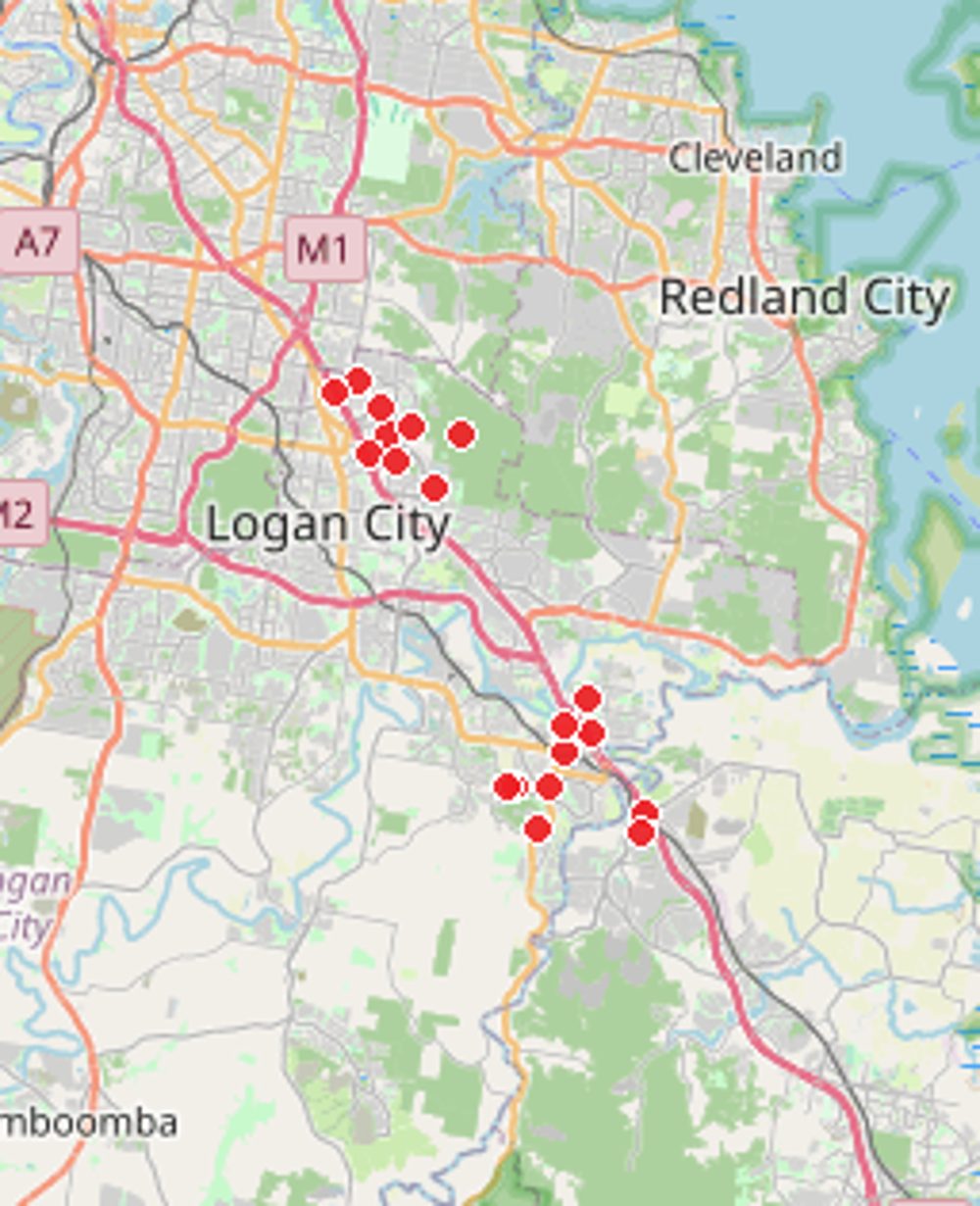
134+ Logan homes — and what your neighbours say.
Every red dot on the map is a home near here we’ve quoted, advised or insulated (de-identified) — recent records only, a fraction of what we’ve done since 1986.
From a local
“Super Professional and efficient. Excellent communication through out the whole process. Thank you so much for a lovely job well done.”
“Peter is honest, hard-working and came on time. Knew excally what he was talking about and answered my questions. Would 100% recommend”
“Very professional, punctual. Father and 2young sons, fast and efficient. Did more than required, found other repair concerns on roof not related to job and videod for me. Also put a few screws in holes that had no nails and cleaned gutters for free. Money well spent”
The local picture
What Logan homes actually need.
Because Logan sits away from Moreton Bay, it doesn't get the sea breeze that takes the edge off summer in Cleveland or on the coast. Afternoons sit hotter and stiller, and clear winter nights run a few degrees colder. That wider day–night swing is exactly where a deep, settled cellulose ceiling blanket earns its keep: it slows the afternoon heat coming through the roof and holds warmth in on cold mornings, smoothing both ends of the day.
What it costs
What ceiling insulation costs in Logan.
As a rough guide, ceiling insulation runs $42–$61/m² including GST, depending on the product, your roof type and how hard the access is. A simple low-set roof with an easy manhole costs less per metre than a cut-up two-storey full of downlights, so I don’t publish one flat number for Logan. Send me your address and I’ll measure your roof off Nearmap and give you a proper fixed-price quote within 48 hours, with no deposit to pay.
Recommended prices. Your local Comfort Zone team confirms your exact price in a written fixed-price quote.
Logan in brief
Founded
Captain Patrick Logan reached the Logan River in 1826 and the river gave the city its name; Logan Shire was created in 1979 and proclaimed Logan City in 1981.
People
345,098 at the 2021 ABS Census (Logan LGA, LGA34590), median age 34. The estimated resident population had grown to 403,515 by June 2025 — one of Queensland's fastest-growing LGAs.
Industry
Manufacturing, construction, retail, health care and social assistance, transport and logistics, and education — a major residential and industrial growth corridor between Brisbane and the Gold Coast.
Setting
A 70-suburb local government area in the south of Greater Brisbane, sitting between Brisbane and the Gold Coast and straddling the Logan and Albert River catchments. Humid subtropical climate — warm, humid summers with afternoon storms and mild, drier winters.
Why Comfort Zone
Cellulose insulation, by the family that makes it.
The only cellulose insulation maker still operating in Queensland.
We manufacture every bag ourselves in our own factory at Tiaro. The other Queensland cellulose makers have closed down over the years — these days our competitors buy their cellulose from us. Choose Comfort Zone and you’re dealing with the family who actually makes the product, start to finish.
We make our own cellulose
Most cellulose insulation sold in Australia is manufactured interstate — in Victoria, South Australia or WA. Ours is made right here in our own Tiaro factory, so you deal with the family who makes it, not a sales rep reselling someone else's product.
Three generations, since 1986
Peter learned the trade from his father, Lyle, and runs the business today with his sons. A real family business that's been insulating Queensland homes for nearly 40 years — not a franchise call-centre.
QR-code batch-tracked bags
Every bag we pump into your roof is QR-coded and tracked back to its production batch and your job — full traceability that even the big national brands can't offer.
Don’t take our word for it
Here’s what Luke, a fellow Logan local, reckons about us.
Filmed on a real Jimboomba job — not a paid actor.
Read the transcript
Sorry. So I'm just here with Luke. I've just insulated his house and his granny flat here. So what do you think about our service Luke? Really good service. The email is really precise, lots of information. I recommend him to anyone. Cleaned up all the mess when he went and I can feel the temperature difference already walking in. It's not even a real hot day yet. So, real good. Excellent. Thanks very much Luke. No worries mate.
Logan climate
The weather your insulation has to handle.
- NCC climate zone
- Zone 2 — humid subtropical, cooling-dominated (NCC 2022 climate-zone classification). The whole insulation design here is summer-led: block radiant roof heat and tame humid heat-load, not winter frost.
- January mean overnight minimum
- 20.7 °C — Logan nights barely cool down in peak summer. Source: BoM Logan City Water Treatment Plant, station 040854 (record from 1992, 32 years; verified against the live BoM table).
- July mean overnight minimum
- 9.0 °C — mild winter nights; frost is rare on the plain. Source: BoM Logan City Water Treatment Plant, station 040854 (record from 1992).
- Summer day heat (representative max-recording station)
- January mean maximum 30.6 °C and July mean maximum 21.4 °C at Archerfield Airport, BoM station 040211 (records since 1929), on Logan's northern boundary — used because the in-city station 040854 logs only minimums, not maximums. Hot summer days, mild winter days.
- 9am summer humidity
- Runs high right through summer — roughly low-to-mid 70s % relative humidity at 9am across December–February. High humidity makes the heat feel worse and slows the body's own cooling, so a sealed, well-insulated ceiling does the heavy lifting. Source: BoM Logan City WTP, station 040854 (humidity record 1992–2010; verify exact percentages against the live 040854 table).
- Annual rainfall
- Roughly 1,090 mm a year, falling mostly in a wet, stormy summer (February is the wettest month). The downpours arrive with the heat, so a dry, moisture-managed roof space matters. Source: BoM Logan City WTP, station 040854 (rainfall record from 1992; verify exact mm against the live 040854 table).
Logan's climate signal is heat-led, not cold: it sits in the humid-subtropical southern Brisbane plain where the long-term Bureau of Meteorology record shows hot, sticky summers and mild winters, and South East Queensland's summer cooling demand is what drives household power use. Frost is a non-issue on the plain. The honest takeaway for a Logan home is that the insulation job here is about keeping radiant roof heat and humid heat-load out in summer, not fighting winter cold — so design the ceiling for the heat.
Note: Springwood has no long-record station of its own; extremes are from the nearest reference station and are district-indicative.
Climate outlook reviewed 2026-06-11; local job counts updated 2026-06-26. Sources: BoM: ENSO outlook · ABCB climate-zone map.
Logan at a glance
- Climate zone
- Climate Zone 2 — what R-value that needs
- Postcodes
- 4127
- Local picture
- Springwood (≈9,700) is one of Logan's established commercial-and-residential hubs, surrounded by a fast-growing city of detached homes.
Logan is NCC Climate Zone 2. Being inland of the bay, it misses the cooling sea breeze, so a deep cellulose ceiling that holds back the afternoon heat-soak and keeps warmth in on cold mornings is the highest-value upgrade.
What Zone 2 actually needs — straight from the NCC
Logan sits in NCC Climate Zone 2, where the code asks for about R2.5 of added ceiling insulation (NCC 2022 Housing Provisions, Part 13.2.3, Table 13.2.3c) — and we install a deep, gap-free R3.0 cellulose blanket as standard, about 20% over the minimum. Our climate is cooling-dominated, so there's no point chasing a giant R-value the weather won't reward; getting the blanket seamless and gap-free across the whole ceiling matters far more, especially under a hot tile or metal roof. Beware quotes citing “R5.5+” as the ceiling figure — that's a total-system / NatHERS number for the cold southern states, not what we need here.
Read it yourself: NCC 2022 Housing Provisions, Part 13.2.3, Table 13.2.3c — free from the ABCBThe season ahead — and why it matters for your insulation
Mid-2026 transitioning from La Niña toward an El Niño lean, warmer and drier for SE QLD into spring–summer. Reviewed each season.
Colder than you think
It’s colder around Logan than in it.
Logan sits on the low coastal plain immediately south of Brisbane and shares Brisbane's hot, humid subtropical summers and mild, dry winters. The closest full-record Bureau of Meteorology station is Archerfield Airport (040211, ~13 m, records since 1929) on Logan's northern edge; the in-city station, Logan City Water Treatment Plant (040854, ~10 m, from 1992), records minimums, rainfall and humidity but no maximum temperatures — so the per-town maximum figures below come from the Archerfield record and the minimums from the in-city station. The three main centres are all low and frost is rare on the plain, though the Logan and Albert River flats around Beenleigh can pool cold air on a still winter morning. Figures are long-term BoM means.
| Town | Height | Avg July night | Frosts / year | Avg summer day |
|---|---|---|---|---|
| Springwood | ~39 m | ~7.8–9.0 °C (Archerfield 7.8 °C; Logan City WTP 9.0 °C) | Rare — near-zero; only an occasional light frost in sheltered low pockets on a still, clear morning | ~30.6 °C (Jan, Archerfield) |
| Beenleigh | ~13 m | ~7.8–9.0 °C (Archerfield 7.8 °C; Logan City WTP 9.0 °C) | Rare on the plain; cold air can pool on the low Logan/Albert River flats, giving the odd light ground frost | ~30.6 °C (Jan, Archerfield) |
| Browns Plains | ~40 m | ~7.8–9.0 °C (Archerfield 7.8 °C; Logan City WTP 9.0 °C) | Rare — near-zero; slightly more exposed/higher ground than the river suburbs | ~30.6 °C (Jan, Archerfield) |
- Representative full-record station Archerfield Airport (BoM 040211, ~13 m, records since 1929): January mean maximum 30.6 °C and mean minimum 20.5 °C; July mean maximum 21.4 °C and mean minimum 7.8 °C — hot, humid summers and mild winters typical of the southern Brisbane plain.
- In-city station Logan City Water Treatment Plant (BoM 040854, ~10 m, records from 1992): July mean minimum 9.0 °C and January mean minimum 20.7 °C. This station logs rainfall, humidity and minimum temperatures but does not publish maximum temperatures.
- Town elevations are all low — Beenleigh ~13 m, Springwood ~39 m, Browns Plains ~40 m — so there's little altitude difference to drive colder nights; winter nights across the three centres run roughly 8–9 °C.
- Frost is rare across Logan's town centres: BoM's monthly tables for these stations carry no frost-day statistic, consistent with a near-frost-free subtropical lowland. The realistic risk is an occasional light frost only in sheltered, low-lying river pockets on still, clear winter mornings.
- Flood, not frost, is the climate hazard here: the Logan and Albert Rivers flood the low flats around Beenleigh, Loganholme and Eagleby, so the same low ground that pools cold air at night is also the flood-prone country.
Source: Bureau of Meteorology, Climate statistics for Australian locations — Archerfield Airport, station 040211 (bom.gov.au/climate/averages/tables/cw_040211.shtml) and Logan City Water Treatment Plant, station 040854 (bom.gov.au/climate/averages/tables/cw_040854.shtml). Town elevations from topographic data for Springwood, Beenleigh and Browns Plains (soft context only). All temperature figures are long-term BoM means.
A bit about Logan
We know this patch.
- Logan is one of Queensland's fastest-growing local government areas — its estimated resident population reached 403,515 by June 2025, up 3.1% in a single year (City of Logan ERP via Logan Office of Economic Development).
- One of Australia's most multicultural cities: its community represents more than 218 ethnicities and about a quarter of residents were born overseas, with top birthplaces including New Zealand, England, India, the Philippines and Samoa (Logan City Council Statistics and Facts).
- Beenleigh is home to the Beenleigh Artisan Distillery — promoted as Australia's oldest registered distillery, operating since 1884 from its heritage stone building on the banks of the Albert River (Beenleigh Rum).
- Logan hosts the Logan Eco Action Festival (LEAF), the city's largest sustainability event — a free festival at Griffith University's Logan campus at Meadowbrook (Logan City Council).
- The Logan and Albert Rivers are flood-prone: major flooding hit during ex-Tropical Cyclone Debbie in March 2017 (inundating Beenleigh and Eagleby) and again in the February–March 2022 South East Queensland floods, when the Logan River saw its most significant flooding since 1974 (Bureau of Meteorology; Logan City Council).
Local links: Logan City Council — Statistics and facts · ABS 2021 Census QuickStats — Logan (LGA34590) · Bureau of Meteorology — Logan/Albert River flood warning system · Griffith University — Logan campus (Meadowbrook) · Bureau of Meteorology — Archerfield Airport climate statistics (station 040211)
What we’d recommend in Logan
The insulation that suits Logan homes, and why.

Comfort Zone insulation.team
Family-owned insulation manufacturer, making comfy homes since 1986
Many Springwood homes are elevated Queenslanders on stumps, so underfloor polyester controls the heat and damp and steadies the floor temperature year-round.

Comfort Zone insulation.team
Family-owned insulation manufacturer, making comfy homes since 1986
Older Springwood ceiling cavities often have thin or patchy insulation; pumped cellulose fills every gap for a real lift in comfort across the wide inland day-to-night swing.

Comfort Zone insulation.team
Family-owned insulation manufacturer, making comfy homes since 1986
Homes near the Pacific Motorway corridor cop steady traffic noise, and dense cellulose dampens that airborne noise better than lightweight batts.
That’s what we see most in Logan. But every home is different. Browse all our insulation services or ask for a quoteand we’ll tell you what yours needs.
Underfloor, done right
The floor most Loganites never think about — and when it's actually worth doing

Comfort Zone insulation.team
Family-owned insulation manufacturer, making comfy homes since 1986
Here's the thing most people never think about: the floor. A lot of Logan tells you its era by the suburb — Springwood, Slacks Creek and Daisy Hill went up through the seventies and eighties, plenty of them highset timber homes up on stumps, and the older core of Beenleigh has its classic Queenslanders sitting open to the breeze underneath. If that's your house, those floorboards are doing more than holding you up. In winter the cold air sweeps under the house, chills the boards, and you feel it through your socks the second you get out of bed; worse, the cold radiating up off those boards drags the comfort straight back down and any warm air near floor level drops out through every gap between the boards. The Australian Government's YourHome guide puts it plainly: bare floorboards give you only about R0.25, which is next to nothing, and it warns that even a small gap knocks the value of insulation right down — and an old timber floor is nothing but gaps.
Summer flips it, and this is the one that hits a Logan power bill. You've got the air-con running, making that lovely cool, heavy air, and cool air sinks — it pools down at floor level, finds the cracks between the boards, and falls straight out through the floor into the open space under the house. You're air-conditioning the dirt under your home. That's exactly why a sealed, properly insulated floor matters so much, and why coverage is everything: the industry council's 2024 ICANZ figures show that only about 6 percent of the surface left as gaps roughly halves the effective R-value, so a patchy job is barely a job at all. We fill it properly, snug to every joist, with no gaps for that conditioned air to escape through.
Here's how we do it: this is for the highset timber homes on stumps. If you're in one of the slab-on-ground estate homes out around Browns Plains, Regents Park or Park Ridge, your floor sits on concrete, the ground underneath holds a steady temperature, and underfloor insulation simply isn't a job worth quoting you for — we're not going to sell you something you don't need. On the timber homes, the NCC is clear that floor insulation has to be installed and held firmly in position to actually do its job, snug against the joists rather than sagging away over the years. If you want to know whether your floor is one worth doing, jump on our online quote, tell us what you're sitting on, and we'll give you an honest answer.
Watch: real jobs
See the work for yourself
A few from our own channel: does cellulose really settle, the flame test, and why we pump it in instead of laying batts.
Filmed on real jobs over the years — our methods, safety standards and products have moved on since. Subscribe to the channel for more.
The difference
On a Logan roof: what we run into, and how we do it.

Comfort Zone insulation.team
Family-owned insulation manufacturer, making comfy homes since 1986

Comfort Zone insulation.team
Family-owned insulation manufacturer, making comfy homes since 1986
Where we’ve helped — suburb by suburb
202+ Logan homes, and the postcode for yours.
Find your suburb below — the number is how many homes near you we’ve helped with advice or work. These are only the last few years we’ve kept digital records for, a fraction of what we’ve done since 1986, so if there’s no count next to your suburb yet, be the first on your street.
Logan & surrounds
202+ homes helped here
- 4128Shailer Park18 homes
- 4123Rochedale South18 homes
- 4115Algester13 homes
- 4127Slacks Creek11 homes
- 4207Beenleigh10 homes
- 4207Eagleby10 homes
- 4118Regents Park10 homes
- 4127Springwood10 homes
- 4130Cornubia9 homes
- 4205Bethania9 homes
- 4116Calamvale9 homes
- 4129Loganholme8 homes
- 4127Daisy Hill7 homes
- 4207Logan Village7 homes
- 4128Tanah Merah6 homes
- 4114Kingston6 homes
- 4123Rochedale6 homes
- 4131Loganlea6 homes
- 4118Browns Plains5 homes
- 4132Crestmead5 homes
- 4119Underwood4 homes
- 4207Edens Landing4 homes
- 4132Marsden3 homes
- 4133Waterford2 homes
- 4131Meadowbrook2 homes
- 4133Chambers Flat2 homes
- 4125Park Ridge1 home
- 4116Stretton1 home
Counts are de-identified contacts from our records — homeowners we’ve helped with advice or work, not just completed jobs. See the customer map.
Your local team
Logan is looked after directly by Comfort Zone HQ — for now.
Right now Logan is served straight out of our family HQ and Tiaro factory, the same people who make the cellulose. Every job is done to one standard, photographed, and the photos checked before you’re invoiced.
Want to run Logan as your own business?
We’re looking for the right local owner-operator for this patch. If you’re passionate about the building trade — or you already run a business that fits, like air-conditioning, pest control, roofing or solar, and you want a high-margin add-on product to take to the customers you already have — we’ll train you from the ground up. You don’t need insulation experience; you need the right attitude and a patch you want to own. We make the product, we teach you to install and sell it, and you build a family business of your own — backed by the factory.
Logan questions
Insulation in Logan — your questions, answered.
Logan barely gets a frost — do I even need insulation here?
You need it more than someone down south does, just for the opposite reason. We're NCC Climate Zone 2 — humid subtropical — and our problem is heat, not cold. Summer days push past 30 degrees and the January nights only drop to about 20, so the bedroom stays warm and sticky after dark. A well-insulated, sealed ceiling stops the radiant heat pouring out of your roof cavity into the house and keeps the cool, dehumidified air where you paid to put it. Frost protection isn't the job here; keeping the heat out is.
What R-value should I be putting in a Logan ceiling?
For our zone the NCC sets a ceiling baseline of about R2.5 added — and chasing a bigger number than that won't buy you anything. More R-value past the right point for your roof does nothing extra; it's like sunscreen, once you're covered, slathering on more doesn't make you any less burnt. What actually wins in Logan is coverage and a sealed ceiling, not an inflated number on a label. Tell us your roof type on the online quote and we'll match the right R-value to it.
I've got slumped old batts up there — do you have to rip them all out first?
Usually no. In most Logan ceilings we top straight over the old batts with cellulose — about 120mm adds roughly R3.0 over whatever's there, fills all the gaps the batts left, and covers the joists the batts never could. That saves the value of what's already there and saves you the mess, the landfill and the dump fees of a full removal. If the old batts are full of rat nest or wet, that's a different conversation and we'll tell you straight.
My house is on a concrete slab out at Browns Plains — should I do underfloor too?
No, and I'll save you the money: if you're on a slab-on-ground estate home out around Browns Plains, Regents Park or Park Ridge, the ground under that concrete holds a steady temperature and underfloor insulation isn't a job worth quoting you. Underfloor pays off on the older highset timber homes up on stumps — Beenleigh, Springwood, Daisy Hill — where cold air sweeps under the floorboards. We only quote what your house actually needs.
Can I get a price without someone coming out to inspect the roof?
Yes — our quotes are done online and they're a fixed price. You jump on the online quote, tell us your roof type, ceiling and rough floor area, and we give you a price that doesn't get bumped up when we arrive. No call-centre, no pushy in-home sales visit. And we won't make following up your job — we'll call you, that's our job, not yours.
We're in a flood-prone part of Logan near the river — does cellulose handle moisture better?
It handles a roof leak in a way batts simply can't. Cellulose is hygroscopic — if water gets in from above, it holds the wet in one spot instead of letting it run free across the whole ceiling, then it dries out and leaves a visible stain so you can find exactly where the leak is. Batts let water run across the ceiling and into the walls undetected. That said, cellulose is roof-cavity insulation — it's not a flood remedy for rising floodwater; for that you need the right flood repairs. For the leaks that come with our stormy summers, though, it limits the damage.
Is cellulose safe with all the downlights in these newer Logan homes?
It's safe when it's installed by someone trained, and that's the whole point. Old-style halogen and 240V downlights get very hot, and because cellulose insulates so well it can trap that heat — so we never cover them; we shroud them with polyester, leave the required gap, and recommend you upgrade to LED IC-4 lights that are made to be covered. Insulating used to be a trade qualification and it isn't any more, which is exactly why you want a trained team near your wiring and lights, not a backyard job.
Had your Logan home done? A review helps your neighbours choose well.
A quick honest review genuinely helps a small family business, and helps the next person decide. Thank you.
Got photos or a video from the job? Here’s where to send them →
Get a quote for your Logan home.
Tell us your address and a few details and we’ll measure online and send a detailed, fixed-price quote. Phone 0414 586 315.