Where we work · Climate Zone 2
Cellulose ceiling & underfloor insulation in Gold Coast.
Southport and the Gold Coast are full of dark and black tile and Colorbond roofs that soak up the sun and radiate heat straight down into the ceiling. We block that radiant load with a deep cellulose blanket made in our own factory.


Comfort Zone insulation.team
Family-owned insulation manufacturer, making comfy homes since 1986
Real reviews, real jobs
What our customers say
Genuine Google & hipages reviews from Comfort Zone customers across SE Queensland.
- J
Jessa B.
Brisbane
“It dropped about 4 degrees straight away, and we added another 3 with the second job. I appreciate Peter's honesty, and the team showed pictures before and after.”
- Ahipages
Angela M.
SE Queensland
“The fact that I can't even tell it's 6 degrees outside when I wake up in the morning speaks for itself. Have wasted so much money attempting to heat and cool an uninsulated home. Worth every $.”
- I
Iain V-B.
Brisbane
“Quick and polite service. Great follow-up advice and photos sent for our records. Above and beyond what we expected. Would highly recommend.”
- Ghipages
Gerry S
Fitzgibbon, 2023
“I used Comfort Zone and they have a done an excellent job.”
- Jhipages
Jung K
Riverhills, 2023
“An experienced family operation. Highly recommend. Thank you for the great job!”
- Dhipages
David H
Sunshine Coast, 2021
“Completed the job as quoted and to a high standard. Great personal service. Would highly recommend Comfort Zone for ceiling installation work.”
- Bhipages
Benjamin H
Carseldine, 2019
“Very good explanation about their works. Advice of existing problems with the roof. Clean work. Very professional.”
- Ihipages
Ian G
Burnside, 2019
“Good information, communication and professionalism.”
- Dhipages
Danny D
Boondall, 2018
“He explained everything he was going to do and the different types of insulation they used. He talked through the different options but made a recommendation for the one most people use, which is the one I chose. He was very understanding towards what I needed and not about himself.”
- Ghipages
Graham R
Riverhills, 2018
“Comfort Zone. Turned up ahead of time, completed in about 2 hours, cleaned up. All good. Very motivated installation team.”
- Ahipages
Alex B
West Ipswich, 2018
“Fast, friendly, efficient.”
- Lhipages
Luke D
Mcdowall, 2017
“Peter did a good job. It was a quick and clean service. I'm happy to recommend!”
- Bhipages
Brendon
Brays Creek, 2016
“Peter supplied and installed roof insulation for me. He was very informative and provided good advice.”
- Thipages
Trevor G
Brookside Centre, 2016
“Excellent tradesmen from Comfort Zone Insulation. They were punctual and cleaned up after. Highly recommended.”
- Jhipages
John G
Beaudesert, 2019
“Peter is an honest person who provided me with the information I wanted then performed a good job with great results for the benefit of myself and my family.”
- Phipages
P Peter
Alstonvale, 2024
“Connected with Comfort Zone Insulation and would recommend them”
- Nhipages
Nola M
Birtinya, 2024
“They were courteous and competent.”
- Jhipages
Jennifer's E
Upper Caboolture, 2024
“Excellent customer service. Highly recommended. Has a profound knowledge of insulation products and has the best interest of his customer.”
- Jhipages
Jennifer
Upper Caboolture, 2024
“Excellent customer service. Highly recommend. Has a profound knowledge of insulation products and has the customer best interest.”
- Dhipages
Diane A
Ormeau, 2024
“Peter and crew did a great job I would definitely recommend them”
- Thipages
Timea
Highland Park, 2023
“I was extremely satisfied with the service they provided. They gave a very thourough explanation of the materials used, the way the work will be carried out and the price I had to pay was the exact amount quoted, no hidden costs included. They arrived on time, well prepared and workwas carried out exactly how they said it would be, they were super efficient, well prepared and were kind enough to even clean up after themselves. The services they provided was second to none! I don't hesitate to recommend them for any insulation job!”
- Mhipages
Mark
Pottsville, 2017
“Michelle, we are done - Peter from comfort zone insulation was very helpful. very honest with his recommendations - in fact he told me that the product my daughter had if installed correctly was superb. Thanks Peter you are a champion and i would recommend you to any person that was wanting professional advice and old school service.”
- Jhipages
Jessica
Pottsville, 2016
“This business offers a fantastic product that other businesses did not. Pump in ceiling insulation. Knowledge of the industry second to none.”
- Jhipages
Jack
Pottsville, 2023
“Excellent communication and informative. Professional.”
- Thipages
Tony P
Redland Bay, 2023
“Very knowledgeable about insulation”
- Shipages
Steve
Redland Bay, 2017
“Excellent job and reasonable price.”
- Bhipages
Bruce H
Kuluin, 2023
“Prompt and efficient quoting.”
- Ghipages
Gerry S
Fitzgibbon, 2023
“I used Comfort Zone and they have a done an excellent job.”
- Thipages
Tamara
Underwood, 2023
“Peter is honest, hard-working and came on time. Knew excally what he was talking about and answered my questions. Would 100% recommend”
- Shipages
Sterling G
Ashgrove, 2023
“Comfort Zone were very knowledge with great communication and follow up”
- Ghipages
Graham R
Riverhills, 2018
“Comfort Zone. Turned up ahead of time completed in +- 2 hours cleaned. All good. Very motivated installation team”
- Jhipages
Jung K
Riverhills, 2023
“An experienced family operation. Highly recommend. Thank you for the great job!”
- Khipages
Kathy A
North Lakes, 2023
“We connected with Peter through HiPages and he was prompt, professional and even came back after the job was complete to assist with a question we had. We would highly recommend Peter for further insulation works.”
- Dhipages
David H
Sunshine Coast, 2021
“Completed the job as quoted and to a high standard. Great personal service. Would highly recommend Comfort Zone for ceiling installationn work.”
- Shipages
Sue H
Sunshine Coast, 2021
“Incredible customer service”
- Ehipages
Eileen C
Cedar Vale, 2021
“Quality work, good customer service, prompt”
- Chipages
Craig M
Woody Point, 2021
“Called within 5 minutes of request. Very knowledgeable and explained job in great detail, provide great advice in prior preparation for works required. Very friendly and helpful.”
- Jhipages
Jenny C
Plainland, 2021
“Although I did not hire Peter I was impressed with the initial contact and the knowledge he was willing to impart. I was treated with respect which I appreciated. I would have hired but I received a lower quote.”
- Qhipages
Quinton
Coomera, 2020
“Professional installation without any short cuts. True to their word with high integrity. Response from Comfort Zone Insulation”
- Ghipages
Gary P
West Kempsey, 2020
“Came & Gave a free quote”
Where we work
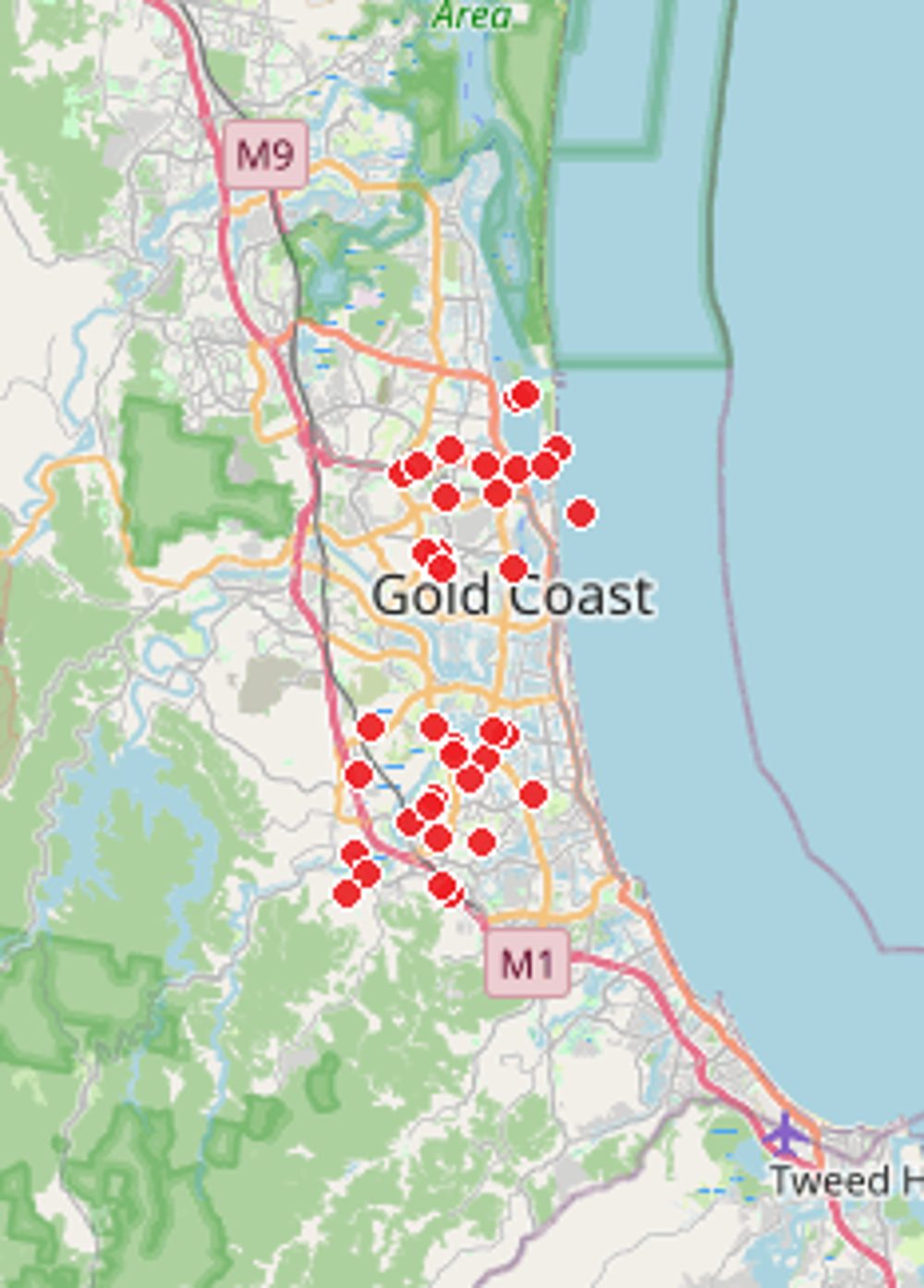
533+ Gold Coast homes — and what your neighbours say.
Every red dot on the map is a home near here we’ve quoted, advised or insulated (de-identified) — recent records only, a fraction of what we’ve done since 1986.
From a local
“Comfort Zone knew their product, they had time to explain everything to me, and I really appreciated this. They turned up on time, did a wonderful job and cleaned up after themselves. A job well done. We are very happy.”
“Peter was very helpful and he explained everything in detail. He was happy to help and he even got up and checked the roof tiles for me. He did a very good job and it's worked well ever since.”
“They were prompt and professional, the job turned out very good with no fuss.”
The local picture
What Gold Coast homes actually need.
Here's the thing about the Coast: even though the sea breeze means it rarely tops 35°C, a black or dark roof absorbs the sun and runs far hotter than the air temperature, radiating punishing heat straight down into the ceiling cavity. That's where a thick cellulose ceiling blanket matters most on the Gold Coast. It blocks the radiant heat coming off that hot dark roof, so the sea breeze blowing through the house actually keeps you comfortable, instead of fighting a roof-cavity oven all afternoon.
What it costs
What ceiling insulation costs in Gold Coast.
As a rough guide, ceiling insulation runs $42–$61/m² including GST, depending on the product, your roof type and how hard the access is. A simple low-set roof with an easy manhole costs less per metre than a cut-up two-storey full of downlights, so I don’t publish one flat number for Gold Coast. Send me your address and I’ll measure your roof off Nearmap and give you a proper fixed-price quote within 48 hours, with no deposit to pay.
Recommended prices. Your local Comfort Zone team confirms your exact price in a written fixed-price quote.
Gold Coast in brief
Founded
Proclaimed a city on 16 May 1959 — today Australia's sixth-largest city
People
625,087 across the city (ABS 2021), in about 270,000 homes
Industry
Tourism, construction and property, education (Griffith and Bond universities), retail and marine services
Setting
A long stretch of surf coast about an hour (70-odd km) south of Brisbane, backed by canal estates and rising to the Gondwana rainforest hinterland
Why Comfort Zone
Cellulose insulation, by the family that makes it.
The only cellulose insulation maker still operating in Queensland.
We manufacture every bag ourselves in our own factory at Tiaro. The other Queensland cellulose makers have closed down over the years — these days our competitors buy their cellulose from us. Choose Comfort Zone and you’re dealing with the family who actually makes the product, start to finish.
We make our own cellulose
Most cellulose insulation sold in Australia is manufactured interstate — in Victoria, South Australia or WA. Ours is made right here in our own Tiaro factory, so you deal with the family who makes it, not a sales rep reselling someone else's product.
Three generations, since 1986
Peter learned the trade from his father, Lyle, and runs the business today with his sons. A real family business that's been insulating Queensland homes for nearly 40 years — not a franchise call-centre.
QR-code batch-tracked bags
Every bag we pump into your roof is QR-coded and tracked back to its production batch and your job — full traceability that even the big national brands can't offer.
Don’t take our word for it
Here’s what Tim, a fellow Gold Coaster, reckons about us.
Filmed on a real Upper Coomera job — not a paid actor.
Read the transcript
Peter: I'm here with Tim, and we've just insulated his place upstairs. What did you think of the service, Tim? Tim: The service today was excellent. Very professional, and really informative; I got to understand how the product works. There'd been a dodgy job done here beforehand, so we're looking forward to the air conditioning performing a lot better now. Peter: And we appreciate you letting us fix that up for you as well. Tim: Yeah, that was great as well. Thank you very much. Peter: Thanks, Tim. Cheers.
Gold Coast climate
The weather your insulation has to handle.
- A humid coastal climate
- Mild, humid and subtropical — no real winter and no frost to worry about. Coolangatta runs a January mean maximum of 28.5°C and a July mean of 20.8°C (BoM 040717), so insulating a Gold Coast home is about keeping the summer heat out and the sticky nights comfortable, not about stopping the cold.
- Days over 30°C (the air-con driver)
- About 35 days a year top 30°C right on the beachfront (Gold Coast Seaway 040764, averaged across 1993–2025), easing to around 20 a year a few kilometres south at Coolangatta — that's more than a month of solid air-con weather, every single year.
- Warm, sticky summer nights
- The nights barely cool off: a January overnight average of 21.9°C at the Seaway (21.0°C at Coolangatta), with humidity sitting around 70% at 9am. A roof that soaks up the day's heat keeps your bedrooms sticky all night, so the air-con runs while you're trying to sleep (BoM 040764 / 040717).
- Hottest on record
- 40.5°C, recorded at the Gold Coast Seaway on 22 February 2005 (BoM 040764). On a day like that an uninsulated roof cavity can climb past 50–60°C, and all of that heat radiates straight down through the ceiling into the rooms below.
- Summer humidity
- High all year and worst in summer — around 70% relative humidity at both 9am and 3pm through January (BoM 040764 / 040717). Humid air makes the same temperature feel several degrees hotter, which is exactly why a sealed, gap-free ceiling that holds the cool, dry air-conditioned air in earns its keep here.
- Annual rainfall
- A wet, summer-storm coast — around 1,300 mm a year at the Seaway and about 1,500 mm down at Coolangatta, most of it falling January to March (BoM 040764 / 040717).
And it's trending warmer: BoM's State of the Climate reports Australia has heated about 1.5°C since 1910, with more frequent extreme-heat events, and the Queensland Government's regional projections point to more very hot days above 35°C and warmer nights across South East Queensland this century. A home that's comfortable now will lean on its ceiling insulation and air-conditioning harder every decade — worth getting right once.
Climate outlook reviewed 2026-06-11; local job counts updated 2026-06-26. Sources: BoM: Gold Coast Seaway · ABCB climate-zone map.
Gold Coast at a glance
- Climate zone
- Climate Zone 2 — what R-value that needs
- Postcodes
- 4215
- Local picture
- Southport is one of the Gold Coast's largest suburbs (low-30,000s), a dense mix of houses, units and the dark-roofed estates that ring the city.
The Gold Coast is NCC Climate Zone 2. The coast itself rarely cracks 35°C, but the dark roofs do the damage, so a thick cellulose ceiling that blocks the radiant load off a hot roof matters more here than the air temperature suggests.
What Zone 2 actually needs — straight from the NCC
The Gold Coast sits in NCC Climate Zone 2, where the code asks for about R2.5 of added ceiling insulation (NCC 2022 Housing Provisions, Part 13.2.3, Table 13.2.3c) — and we install a deep, gap-free R3.0 cellulose blanket as standard, about 20% over the minimum. Our climate is cooling-dominated, so there's no point chasing a huge R-value the weather won't reward; getting it seamless and gap-free matters far more, especially under a hot metal roof. Beware quotes citing “R5.5+” as the ceiling figure — that's a whole-of-home “total-system” / NatHERS number for the cold southern states, not what the coast needs.
Read it yourself: NCC 2022 Housing Provisions, Part 13.2.3, Table 13.2.3c — free from the ABCBThe season ahead — and why it matters for your insulation
Mid-2026 transitioning toward El Niño, a warmer, drier lean for the Coast. Reviewed each season.
Colder than you think
It’s colder around Gold Coast than in it.
On a climate map the Gold Coast splits in two. The coastal strip — the Seaway, Coolangatta, Surfers — is mild, humid and cooling-dominated: the ocean keeps July nights soft around 12°C, summer days in the high 20s, and it effectively never frosts. Climb the escarpment and it flips. Tamborine Mountain runs 4–5°C cooler, Springbrook is colder and far wetter, and the inland valleys around Canungra and Nerang drain cold air on still winter nights. So a beachside home is fighting summer heat and humidity, while a hinterland home needs a genuine winter envelope — a sealed, gap-free, fully-insulated ceiling — to hold warmth through cold, clear nights.
| Town | Height | Avg July night | Frosts / year | Avg summer day |
|---|---|---|---|---|
| Gold Coast coast (Seaway / Coolangatta) | 3–4 m | 10–12°C | Nil — frost-free | 28.5–28.9°C 🔥 |
| Coolangatta | 4 m | 10.1°C | Frost-free | 28.5°C |
| Nerang (Hinze Dam) | ~111 m | 10.2°C | Rare — cold-air drainage | 29.0°C |
| Tamborine Mountain | 515 m | 8.0°C ❄ | A few light frosts most winters | 25.7°C |
| Springbrook plateau | ~900 m | Coldest of the group | Occasional winter frost | Mildest — well below the coast |
| Canungra (valley) | ~70 m | Cold valley nights | Cold-air pooling — odd light frost | Hot inland days |
- The Springbrook plateau is one of the wettest places in the country — about 3,109 mm of rain a year, the only place in subtropical Australia to top 3,000 mm, and probably the wettest spot between Townsville and Tasmania.
- The coast is far drier: the Gold Coast Seaway averages around 1,300 mm a year and Coolangatta about 1,500 mm — roughly half the plateau's total.
- The hinterland is genuinely colder overnight: Tamborine Mountain's July mean minimum is 8.0°C against 12.0°C at the Seaway — about 4°C colder on winter nights.
- Summers are milder up the range too: Tamborine's January mean maximum is 25.7°C versus 28.9°C on the coast — elevation knocks roughly 3°C off the peak summer heat.
- Frost is a hinterland phenomenon: the elevated and valley hinterland cops the odd light winter frost from cold-air drainage on clear, still nights, while the coastal strip is effectively frost-free year-round.
Source: BoM Climate statistics for Australian locations (Gold Coast Seaway 040764, Coolangatta 040717, Mt Tamborine 040197, Hinze Dam 040584, Springbrook), pulled 25 June 2026.
A bit about Gold Coast
We know this patch.
- The Gold Coast has some of Australia's best surf — the Gold Coast World Surfing Reserve runs 16 km from Burleigh Point to Snapper Rocks, taking in the world-famous 'Superbank' (dedicated 2016, only the 8th World Surfing Reserve on the planet).
- A 30-minute drive inland reaches the UNESCO World Heritage Gondwana Rainforests of Australia — Springbrook, Lamington and Tamborine — ancient subtropical rainforest, waterfalls and wilderness trails right behind the beach.
- It's Australia's theme-park capital: Dreamworld, Warner Bros. Movie World, Sea World and Wet'n'Wild are all clustered a short drive from Surfers Paradise.
- Canal-estate living is a defining part of the local housing stock — a vast network of canals and tidal waterways (around 260 km of canals) makes waterfront, pontoon-and-boat homes a Gold Coast signature.
- It's a standout rooftop-solar region — Nerang (4211) and Coomera (4209) are among Queensland's top solar postcodes, with roughly 10,200 and 9,390 solar households (Qld Government / Clean Energy Regulator, 2022). But solar makes power; it doesn't stop a home leaking heat.
Local links: BoM — Gold Coast Seaway climate statistics (station 040764) · City of Gold Coast — council · Griffith University — Gold Coast campus (Southport) · Destination Gold Coast — official visitor guide · The Star Gold Coast · Gold Coast 500 (Supercars)
What we’d recommend in Gold Coast
The insulation that suits Gold Coast homes, and why.

Comfort Zone insulation.team
Family-owned insulation manufacturer, making comfy homes since 1986
Southport's dark tile and Colorbond roofs radiate fierce heat into the ceiling even when the coast stays under 35°C. A thick cellulose ceiling blanket blocks that radiant load so the sea breeze can actually cool the house.

Comfort Zone insulation.team
Family-owned insulation manufacturer, making comfy homes since 1986
Southport sits beside the M1 Pacific Motorway (150,000+ vehicles a day) and the G:link light rail. Dense, gap-free cellulose absorbs that traffic and tram noise better than lightweight batts.
That’s what we see most in Gold Coast. But every home is different. Browse all our insulation services or ask for a quoteand we’ll tell you what yours needs.
Underfloor, done right
Underfloor on the Gold Coast — but only where it earns its keep

Comfort Zone insulation.team
Family-owned insulation manufacturer, making comfy homes since 1986
Underfloor is the one where a lot of fellas will try to sell you something you don't need, so here's how it really works. Underfloor insulation only does a job when you've actually got a floor with open air underneath it — a high-set timber home, an old Queenslander up on stumps, or a hinterland house you can walk under. A bare timber floor on its own is only about R0.25 (that's YourHome, the Australian Government's own guide), which is next to nothing, so heat moves straight through it both ways. In winter the warm air in your living room sinks down through those cold floorboards and escapes into the open space under the house, and your feet cop the cold boards first thing of a morning. In summer it goes the other way: on a 40-degree day the cool air your air-conditioner has worked hard to make drops down and falls straight out through the floor, so the aircon can never quite get on top of the room. Fit batts snug between the joists and you stop both of those — you hold the warm air in through winter and the cool air in through summer — which is exactly why YourHome says underfloor is worth doing on a home you heat in winter and cool in summer, and that's your hinterland and your higher Gold Coast suburbs all over.
But here's where I'll tell you the truth and a lot of others won't: if you're in one of the new brick-veneer estates — your Pimpama, your Coomera, your Pacific Pines — you've almost certainly got a concrete slab poured straight onto the ground, and there's nothing to insulate underneath. No breeze, no gap, no job for us to do. Save your money and put it in the ceiling where it'll actually pay you back. Same goes for a lot of the warm homes right near the water — YourHome's honest that in a warm climate underfloor can even add a touch to your summer cooling load. So on the flat, warm, slab-built side of the Coast, underfloor is usually money better spent elsewhere, and I'll say so.
Where we DO fit it — the high-set and hinterland homes — the install is everything. YourHome puts it plainly: even a small gap can greatly reduce the insulating value. The industry's own 2024 ICANZ figures show around 6% of gaps roughly halves the effective R-value, so a sloppy fit can cut your insulation in half before you've paid the invoice. That's why we fit it tight to every joist, no sagging, no daylight showing through — and the NCC says insulation has to be installed so it maintains its position and thickness over time. Underfloor's the one that loves to droop out the bottom over the years if it's not held right, so we hold it right the first time. Done properly on the right house, it's worth every dollar; on the wrong house, I'll wave you off it.
Watch: real jobs
See the work for yourself
A few from our own channel: does cellulose really settle, the flame test, and why we pump it in instead of laying batts.
Filmed on real jobs over the years — our methods, safety standards and products have moved on since. Subscribe to the channel for more.
The difference
On a Gold Coast roof: what we run into, and how we do it.

Comfort Zone insulation.team
Family-owned insulation manufacturer, making comfy homes since 1986

Comfort Zone insulation.team
Family-owned insulation manufacturer, making comfy homes since 1986

Comfort Zone insulation.team
Family-owned insulation manufacturer, making comfy homes since 1986

Comfort Zone insulation.team
Family-owned insulation manufacturer, making comfy homes since 1986
Where we’ve helped — suburb by suburb
744+ Gold Coast homes, and the postcode for yours.
Find your suburb below — the number is how many homes near you we’ve helped with advice or work. These are only the last few years we’ve kept digital records for, a fraction of what we’ve done since 1986, so if there’s no count next to your suburb yet, be the first on your street.
Northern Gold Coast (4209 · 4210 · 4214 · 4216)
412+ homes helped here
- 4212Helensvale28 homes
- 4226Robina27 homes
- 4215Southport22 homes
- 4215Labrador20 homes
- 4209Upper Coomera18 homes
- 4210Oxenford18 homes
- 4211Nerang18 homes
- 4220Burleigh Waters18 homes
- 4211Pacific Pines15 homes
- 4214Ashmore15 homes
- 4214Arundel13 homes
- 4211Carrara13 homes
- 4227Varsity Lakes13 homes
- 4209Coomera12 homes
- Ormeau12 homes
- 4218Mermaid Waters12 homes
- 4214Parkwood11 homes
- 4210Maudsland10 homes
- 4209Pimpama10 homes
- 4216Coombabah10 homes
- 4218Broadbeach Waters10 homes
- 4220Miami9 homes
- 4211Highland Park9 homes
- 4228Gold Coast8 homes
- 4212Hope Island7 homes
- 4216Runaway Bay6 homes
- 2474Kyogle6 homes
- 4216Biggera Waters5 homes
- 4213Tallai5 homes
- 4213Bonogin5 homes
- 2480Lismore4 homes
- Guanaba3 homes
- 4208Jacobs Well3 homes
- 4217Surfers Paradise3 homes
- 4216Paradise Point2 homes
- 2454Bellingen2 homes
- 2470Casino2 homes
- 4211Beechmont2 homes
- 4216Hollywell1 home
- 4211Gaven1 home
- 4210Wongawallan1 home
- 2474Geneva1 home
- 2455Urunga1 home
- 2480South Lismore1 home
- 4217Main Beachbe the first
- Chelmsfordbe the first
- 4272Eagle Heightsbe the first
- 2474Eden Creekbe the first
Central Gold Coast (4211 · 4215 · 4217 · 4226 · 4227)
195+ homes helped here
- 4226Robina27 homes
- 4211Nerang18 homes
- 4213Mudgeeraba16 homes
- 4214Ashmore15 homes
- 4227Varsity Lakes13 homes
- 4211Carrara13 homes
- 4218Mermaid Waters12 homes
- 4217Benowa12 homes
- 4217Bundall10 homes
- 4211Highland Park9 homes
- 4226Merrimac9 homes
- 4214Molendinar9 homes
- 4218Mermaid Beach6 homes
- 4213Worongary5 homes
- 4213Tallai5 homes
- 4213Bonogin5 homes
- 4218Broadbeach4 homes
- 4226Clear Island Waters3 homes
- 4217Surfers Paradise3 homes
- 4211Advancetown1 home
- 4211Gilstonbe the first
- 4218Nobby Beachbe the first
- 4217Chevron Islandbe the first
- 4217Isle of Capribe the first
- 4217Sorrentobe the first
- Natural Bridgebe the first
Southern Gold Coast & hinterland (4220 · 4223 · 4228 · 4272)
137+ homes helped here
- 4221Elanora33 homes
- 4220Burleigh Waters18 homes
- 4220Burleigh Heads16 homes
- 4221Palm Beach12 homes
- 4272Tamborine Mountain11 homes
- 4220Miami9 homes
- 4223Currumbin Waters8 homes
- 4227Reedy Creek8 homes
- 4224Tugun7 homes
- 4228Tallebudgera6 homes
- 4223Currumbin3 homes
- 4228Tallebudgera Valley2 homes
- 4225Coolangatta1 home
- 4213Springbrook1 home
- 4225Kirra1 home
- 4223Currumbin Valley1 home
- 4224Bilingabe the first
- Numinbah Valleybe the first
Counts are de-identified contacts from our records — homeowners we’ve helped with advice or work, not just completed jobs. See the customer map.
Your local team
Gold Coast is looked after directly by Comfort Zone HQ — for now.
Right now Gold Coast is served straight out of our family HQ and Tiaro factory, the same people who make the cellulose. Every job is done to one standard, photographed, and the photos checked before you’re invoiced.
Want to run Gold Coast as your own business?
We’re looking for the right local owner-operator for this patch. If you’re passionate about the building trade — or you already run a business that fits, like air-conditioning, pest control, roofing or solar, and you want a high-margin add-on product to take to the customers you already have — we’ll train you from the ground up. You don’t need insulation experience; you need the right attitude and a patch you want to own. We make the product, we teach you to install and sell it, and you build a family business of your own — backed by the factory.
Gold Coast questions
Insulation in Gold Coast — your questions, answered.
How much ceiling insulation does a Gold Coast home actually need?
The Gold Coast is NCC Climate Zone 2, where the added ceiling minimum is about R2.5 (Table 13.2.3c). We install a deep, gap-free R3.0 cellulose blanket as standard. Our climate is cooling-dominated — there's no point chasing a giant R-value the weather won't reward — so what really matters is that the blanket covers the whole ceiling with no gaps, especially under a hot metal roof.
I've got a clip-lock or metal roof with solar — can you still insulate it?
Absolutely — it's most of the Coast. A metal roof radiates a lot of heat down into the house, and solar panels make power but don't stop that heat. We pump a full cellulose blanket across the ceiling so the heat has to fight through it, and where we need to we lift sheets to get in. Your panels aren't a problem — we work around them.
My roof is really low-pitch — can you even get insulation in there?
Yes. A low, tight coastal roofline is exactly where batts fail — you can't lay them flat in a space you can't crawl through. We feed cellulose in under the sheets with a hose, so even a low-pitch, raked or no-manhole roof gets a full, even blanket. There's a photo and a couple of videos on this page showing how.
Does underfloor insulation make sense for my Gold Coast home?
It depends on your home, and it comes down to what's under your floor. If you've got a high-set timber home or a hinterland house up on stumps, then yes — underfloor insulation stops your floorboards going cold in winter and stops the warm air dropping out through the floor, and in summer it stops the cool air your aircon has made from falling straight out through the floor on a hot day. But if you're on a slab-on-ground estate block in Pimpama, Coomera or Pacific Pines, there's nothing under there to insulate, so you're far better off putting that money into the ceiling. We can tell which one you've got from your details and a couple of photos, and we'll tell you straight.
It's so humid here — does ceiling insulation actually help with that?
Yes. Your roof cavity gets brutally hot and sticky in a Gold Coast summer. A sealed, gap-free insulated ceiling keeps that hot, humid roof-space air out and the cool, dehumidified air from your air-conditioning in — so the AC isn't fighting the roof all day, and it runs less.
I'm up in the hinterland (Tamborine, Springbrook, Canungra) — is it different from the beach?
Very. The hinterland runs about 4–5°C colder overnight than the coast, cops the odd genuine winter frost, and gets far more rain — Springbrook is one of the wettest places in the country. Up there you need a real winter envelope: a sealed, gap-free ceiling, and underfloor insulation if you're up on stumps. The beachside cooling-only approach doesn't cut it in the hills.
How do you quote a Gold Coast job — do you need to come and inspect it first?
No, and that's the good part. After this many years on the tools, Peter quotes the whole job online from your details, so you're not waiting around for a site visit. You get a detailed, fixed-price quote up front, and we don't bump that price when we turn up — even if something got missed, that's on us, not you. On the rare job where we're genuinely missing a detail, we'll come and check it before we quote, so the price you're given is always the price you pay. We cover the lot, from Ormeau and Coomera down to Coolangatta and up into the Mudgeeraba and Tamborine hinterland, and every finished job is photographed before you're invoiced.
Had your Gold Coast home done? A review helps your neighbours choose well.
A quick honest review genuinely helps a small family business, and helps the next person decide. Thank you.
Got photos or a video from the job? Here’s where to send them →
Get a quote for your Gold Coast home.
Tell us your address and a few details and we’ll measure online and send a detailed, fixed-price quote. Phone 0414 586 315.